



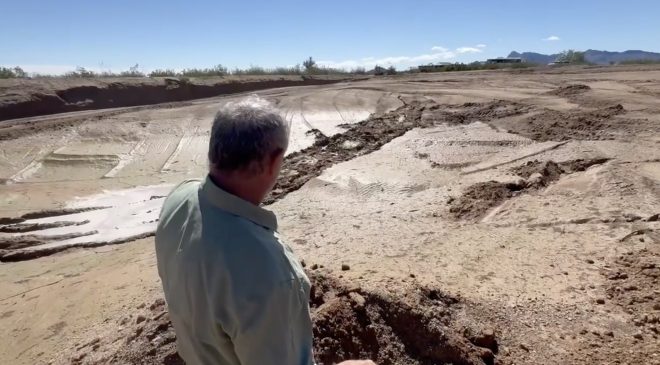
Sand Pond Progress: Clay, Gravel & Why We Dig Here
Welcome to Occupy the Land. We extend the dike on
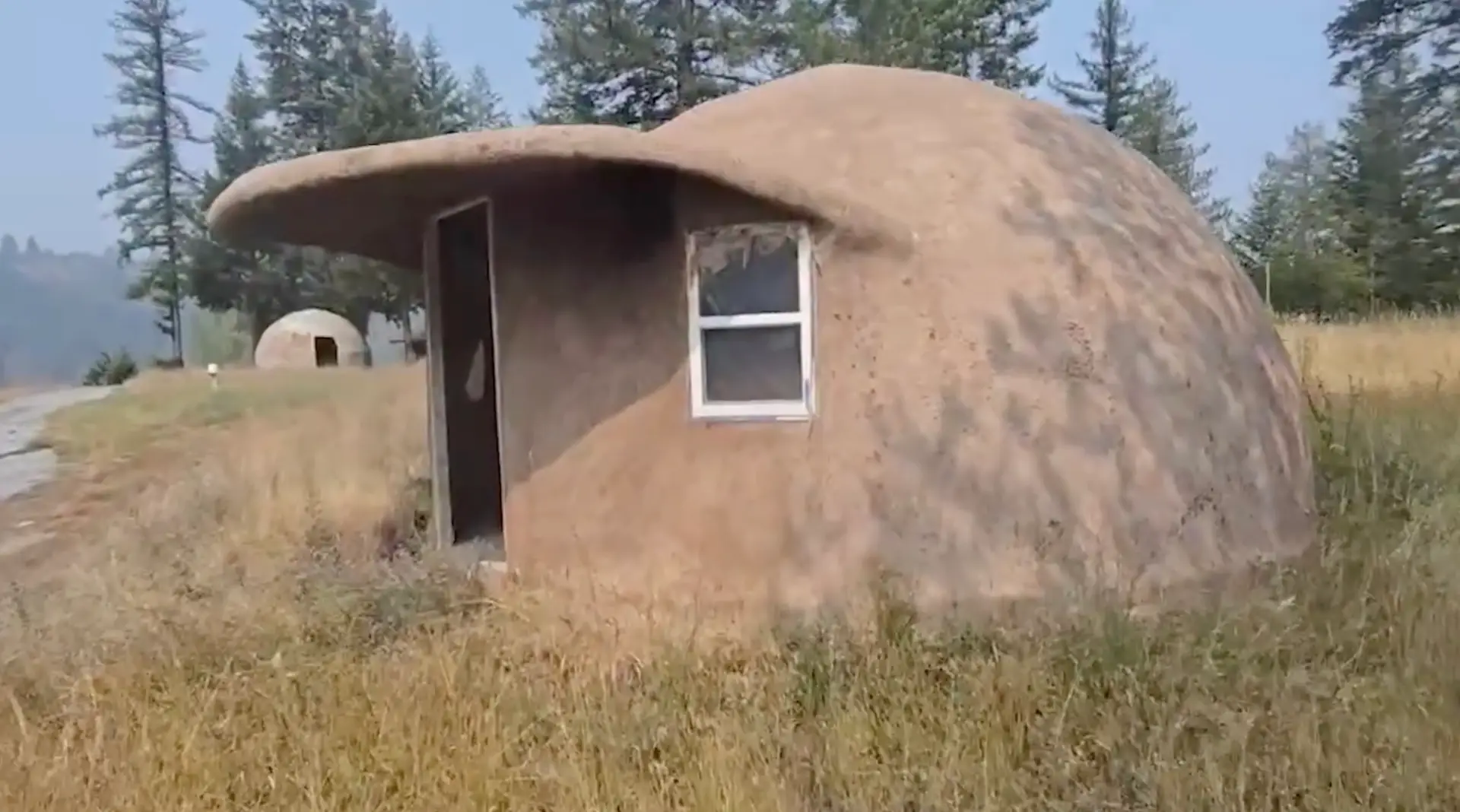
Welcome to Occupy the Land. In this episode we visit long-time friends in northeastern Washington near the Canadian border and Columbia River. Over more than two decades they have transformed a remote box canyon property into a highly resilient, self-sufficient compound complete with multiple housing options (shipping container apartments, cabins, yurt, spa house), a large mess hall for gatherings, gym, tennis courts, extensive gardens, climate-controlled greenhouses, a buffalo herd, fire suppression systems, and food preservation infrastructure. We also revisit the prototype geodesic domes we built here years ago — still solid after multiple Washington winters and summers — and the experimental “donor dome” where we tested different concrete mixes, coatings, and Air Crete techniques that we later brought to Arizona. This property is a living example of long-term preparedness and community resilience, and the owners are now preparing to host freedom-oriented and health-focused events. A powerful look at what’s possible when you commit to occupying the land.
Transcript:
Welcome to occupy the land. Occupy the land. Now we’re up in northeastern Washington, near the Canadian Idaho, Columbia River. And we have friends and supporters up here that we’ve known for decades, a long time. And they had the resources to create a readout for surviving the zombie apocalypse. But the it was slow development over decades, and they built up a lot of resilience.
And I want to detail a lot of it for you. But this is the beginning of August in 2026, and there’s a lot of fires up here north around Spokane and Washington state. And it’s just usually it’s very beautiful and green and the mountains there, but very smoky up here. Now what I’m going to do is just go ahead and just make this, you know, one continuous tour around and give you an idea of what they’ve accomplished up here.
Now, 20 years ago when we first they first bought this place and it’s, you know, it’s not there. It’s a primary home. But they, you know, are wealthy and they, you know, live around the world and they travel a lot and so on. But this is kind of home for when things get bad. They wanted to have a place that they knew they would have food, water, security, protection, community, and that’s what they’ve done.
So we’re going to go ahead and show you a little bit of what they’ve accomplished up here. That took a while. Now there’s only about 6 or 7 families or properties that are back in this box canyon. And you can see it’s surrounded by mountains and this box cannon here. And they have, you know, a couple hundred acres that they’re developing now.
This was just open, you know, there was nothing out here, and none of this was just one farm house and. And a pool barn that they had a portable trailer in. Now, what they’ve done is a experimented with a lot of things and put a lot of infrastructure over the years. Now they’ve taken a couple of shipping containers and they made an apartment out of one.
We stayed in there before and it’s nice, you know, they’ve done that. Then they have a pull barn back over there for a lot of their supplies and the building and such. Then they have a three apartment building that has three separate apartments over there. It’s very nice sort of staying down. And I are staying now and then they created this driveway to where they planted these trees.
They were probably, oh, 20, 15, 20% that size years ago. And now it’s just really coming out really nice. Now at the end back there, we’ll go down. That’s a tennis court back there. They have I’ll go over here. We’re gonna have to bait all their privacy. But we have a gym. This is a two story. Has a gym and a game room and apartments upstairs and family area.
And that’s kind of their, you know, tennis shack. Got all the goodies in there, and that is a mess hall. So it’s like a big cafeteria. They started doing weddings there already and it’s for gatherings and events and you know, a lot of presentations that they want to start doing events here. And I guess they’re out there mowing.
Then they have R-V spots. Now there’s probably about 4 or 5 RV spots. And up here is where they allowed us to build a prototype dome and a donor dome to test out a lot of different. They had the area and they said, yeah, you can go, you know, do it up there. And then they’ve got a dome that they’ll get to eventually and make part of their infrastructure here.
But we’ll go and look at that and show you what we learned as we’re taking those techniques to the land. Now, this is just the upper part of the property. Now, on the other side of those trees over there is a big field that they have for doing agriculture if they want. Now, down in the valley on the other side of those buildings, it goes down, is where they’re primary farmhouses and a bunch of other buildings, I’ll show you.
But they have big fields out there where they keep their on over a dozen buffalo. So they have a buffalo fence, man. It’s a you got to have a sturdy fence and we’ll go over there. I’m not going to get all invasive on there, give you exactly where it is or anything. But they are kind of not clandestine.
They’re going to be having events up here and so on. So it’s not a big secret, but we’ll show you a lot of the inspiration that we’ve had of what can be done. Now. There’s the field that you saw. The tractor was mowing. These are some of the Wr-v spots along this ridgeline that they have here. Now these are neighbors that are over there now.
A gentleman and his wife over there. We learned a lot about making cheese from goat milk and so on there over the years. And up that way as the border of Canada is over there, I think. And then, you know, on this ridge and there was our prototype dome. Now, one summer we came up and I’ll show you the inside of it.
00:06:22:13 – 00:06:48:12
Unknown
They have it here. It’s just sitting there for kind of like three years, and they’ll make use of it whenever they want to make use of it. You know, we have this structure that is just it hasn’t cracked. I mean, it’s not you know, they they put this they started having people experiment putting, you know, splattering camouflage on it or whatever.
Generally it was this color. It was it was just a sand color that we did tenting and they started playing with it. But this is it’ll start echoing when we get in here.
That’s the construction now. This is where a rocket stove is going to go.
Show you how we did the door and windows from the inside.
You know, had the power that’s going up to the center. Now, normally we would want to have a bigger window over here. But we were experimenting. We put it in, you know, electrical around it and see if I can see the boxes here somewhere.
And. Yeah, there. So we have electrical conduit that’s in here ready to be done. And this is just to be a bedroom. It’s just like a cabin. Now one of the things that we wanted to do is we wanted to make sure that we could put out an overhang that would protect the door and the windows and then these cavities.
How if you look at the videos of when we were doing this and we were experimenting with it now, we put it on a slab foundation and just kind of. Angled all the concrete and everything in. And this was done a few years ago and has gone through Washington winters and summers. And it’s not there’s no cracks, you know, we know how to do this and make it a nice finish and integrate it into.
So I’m very confident that what we do in Arizona is going to hold up really well. And then as time goes on, like we had our last week’s video where we went to the what they call it method, the air creep blocks that Mike Swat did. Once you start putting stuff inside and walls and furniture and everything, the echo really comes down.
Now, this was a donor dome. What we did is we put up and we tried a lot of different methods of how we mix, different types of concrete and so on, and it was amazing that they allowed us to use this and do this. Now we they have crew as they’re building a bunch of stuff out here, they can come out and finish and do whatever they want, but they allowed us to go ahead and experiment and then they would make use of this as for storage or whatever later.
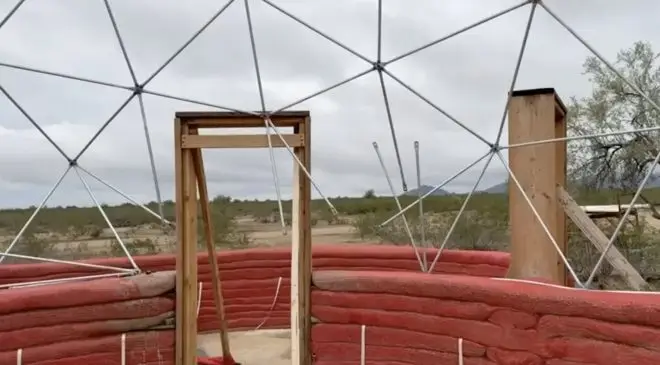
Now what we did is we just did the concrete. You can see the reinforcing meshes that we did. Then we put on different coatings, different ways of putting on coloring and different material and layered it. Now a lot of this is well, not that. Yeah. This stuff, this is Air Crete. Now if you you can pick it up.
We didn’t put an adhesive underneath it. We could adhere that more. But you can build it up with Air Crete and then put stucco over it which is what we did here. So this is you know, shows that that’ll really keep this in there. And you could have, you know, insulating. So we just poured it on there like it was fudge on a Sunday.
And a lot of we called it the Donor Dome. And we were experimenting for a couple of months on just different kinds of ways of coating this and how strong it would be. Now I’ll show you the inside.
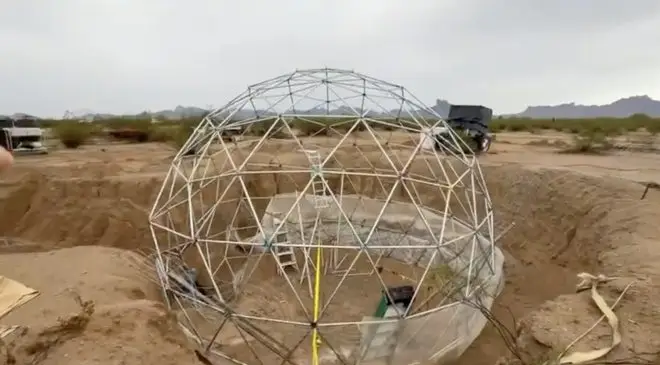
So you can see the structure. Now, this is only one half inch conduit where most of the stuff we do is three quarter inch. Then you put this hog fence wire there, the mesh over it, and then you just put concrete on it. And this is just one, you know, main coat we did on the outside. We didn’t even really seal it or anything.
This is just, you know, here for future. And then we had, you know, a large dome. That’s what these struts are. We had a 30ft workshop that was constructed and these were windows that we had for ventilation, and then we had the covering and so on. And we just put this in, put all the stuff in here. Now this was for the other dome, the prototype over there for doing the rocket stove.
But we never got to that. We ran out of time. So you can see we already had the experience to get to this point, that this is solid. It’s hard. It’s not going anywhere. There’s you know, it’s it’s amazing how these domes work. So this is what gave us the confidence to do what we wanted to do. And then of course, we have the stamp press to make all these struts, and we just put them together and make a dome.
This is a building that they constructed since the last time we were here is fire suppression. So they have all the pumps and water tanks and backup and so on. You know, for fire and up here and you can have some fire. Now, this is their mess hall. It’s really nice inside. Full kitchen, large open area for having events.
And it’s just beautiful up here. You know the tennis courts and you know they have what they call bocce ball and all kinds of fun that come up here and entertain with children and people recreating and a lot of places for them to stay for events. And then up on that platform observation, observation area so that they can, you know, they had weddings up.
I’ll go up there and you can see the valley down below and we’ll check that out. Now, those are firehouse, you know, the storage of water and equipment, you know, for fire suppression. So you get kind of an orientation. We came around this road to get to the mess hall. Now, this is very large and heavily equipped. And I won’t, you know, invade your privacy and go in to much.
But you can see that, you know, they’re still under construction. But this is so nice up here. Now, this is their property, and their property goes that field there.
Goes all the way around on the other side of way over there. Now, the only place that’s the rooftop right there of the original farmhouse that was here, that was all that was here. And then a little pull barn. Now, what they have is they have investment in a dairy farm that’s nearby. So they get all the dairy products that they need and they sell locally.
Then they have their gardens over there. On the other side of those buildings, there is enormous amounts of gardens. And then you have, you know, out in the field there that’s for, you know, their pigs and chickens and, you know, the buffalo are out there somewhere. There they are.
At Buffalo. And then they have that was the original under the pole barn. There was a portable that they took out and then rebuilt the office and so on. And that’s an apartment down there. And then they have a workshop. Yeah, that was here to the workshop there. And that’s where they do a lot of their carpentry and so on.
And then this is a big giant ice freezer walk in cooler freezer thing for all of their prepping that they do for all of the gardening that they do. Now you can see the roofs here of greenhouses. Now these greenhouses have big giant conduit or culverts that go vertically into the ground. So that up here, when it freezes, it keeps it, you know, above 40, 50 degrees in there.
And then of course, they have additional heating that they could have whatever plants that they want. So this is a food production. Now this right here is garage area that they got. And it was into a gravel. This whole hill here is just like river gravel and so on that they use for the roads and so on. So they got their own gravel here.
So that works out well. And then this is an office now that has a big laundry room and conference rooms and their offices and their communications and so on. And then down, we’ll drive through real quick. I’ll just kind of show you, I don’t want to bother anybody, but we’ll on the other side of this ridge is a whole nother area that they have for staying at a yurt.
They got what they call the spa house, a common bathrooms and a pond that used to be just like a marsh. And it’s a the wife, she just really had a vision. I remember walking this back when there was nothing. And over the years you just see it developing and they just keep working on it. Now what they’re going to be doing.
The only reason that I’m showing this to you now is because they’re opening it up for events. This is not going to be a secret. And as soon as they get it to where they want it, there’ll be a lot of freedom oriented health events and so on up here as we get into occupying the land and promoting that concept.
It’s about community, and they are a linchpin up here for the community. In the small community downtown, Covid really took a hit on them. So they purchased a general store and they refurbished, you know, a church. They have a general store that they’re getting ready to stock. All the restaurants kind of moved out and so on. So they’re revitalizing this area based on the idea of self-sufficiency and demoing it here.
So of course, they employ a lot of the people up here in building this. So it’s not like they’re a secret, but they really are making something really nice up here to be very inspirational to a lot of people. Now, this is the commercial kitchen that they have for doing events and so on. You can see there’s big coolers, walk ins, another floor upstairs.
They got, you know, all kinds of prep area. And I mean it’s amazing. This has been going on for a long time. And then of course this is the event area and they’re still under construction. This is not even well it’s close to being done, but it’s a you know in the bathrooms and such are down there. So you can see they can have really nice events here now as we come out of this.
This on the lower floor and where I was before showing you is up there, you know, that’s the balcony. Now, this is the outdoor area of the, the gym and the apartments, and they have a music room, you know, behind those glass doors and so on, and a lot of apartments that are up here for people that come for the summer and have guests, they always have a bunch of people here and they got ATVs for everybody go around and doing stuff.
Now, one thing they have added since I’ve been here, since the last time we were here is this. Now those have wood burning furnaces on the left behind that lift over there, you can’t really see it, but the it heats. It’s a boiler that heats using various different fuels but primarily wood they’re using. And it heats this entire area up here.
Now these apartments over there, there’s three apartments and Donna and I are staying over there. We’ve tried everything. We’ve been, you know, every living opportunity housing that we’ve had up here, we’ve done the year and we’ve done different apartments and, you know, spa house and everything just to experience all of this. And so we know and they, they own up to the top of that ridge I think over a little bit and back over there.
So they got a lot of opportunity to expand. But it’s also defensible. You know you have the ridges you know you win. So this is we’re going to go down and I’ll show you some of the areas down there also.
Well this is new I haven’t been back here since we got here. Now this is a you can see their man. They’re making it go where. What we have here is the men’s and women’s bathroom. You know they have I don’t know if I can step on that. So this is the common bathroom for the camping area down here.
Now, these cabins were inspired by a a place in called Mount a Cinnabon in British Columbia. We had gone there years ago, and they just had these cabins with no water or electricity or anything. And it, you know, she she added a little bit of electricity, but she needed to have the common bathroom because our hostess, she was very inspired by just being off the grid, you know, outside of Wi-Fi to be quiet and reflection and just be in nature.
So that’s why these you want to get away from it. You come up here, you can get away from it. Now these are very comfortable, you know, nice little cabins and so on that. And this is kind of where the families and the kids run around and play and have a good time. And this is what they call the spa house.
And this is where we used to have our meals and everything before the mess hall kind of got finished. And the reason they call it the spa house, they have a lot of health equipment up here. You know, it’s they’re very concerned about their health and eating right and such and treatments, massages, sauna, you know, a lot of things like that are here improve your health.
And then we have the kids are always here. And this is a lot of times you’ll see some video of our families come up here and so on. Are kids running around now this is a hot tub and a nice big hot tub. And then it has water feature that comes up, you know, that’s new to that and been here for two summers.
So. And then this pond used to be a swamp and it’s just really turned out nice. You see, if I can get down this hill without falling. Now around here is where the overflow from this pond goes down to the Columbia River. And it just continues down that way. Now, what I wanted to do is show you the unit.
Now, they have all kinds of different kinds of, you know, sleeping opportunities. And the unit was very inspiring. That was one of the first times that we got to stay in something that was in the round, and it’s amazing how much space you have that you don’t really realize until you get in the round. So.
And there’s that. And that’s been there for God decade. You know, this really held up. I don’t know what that material is, but it does really well. So that is a nice place to stay there. Now up there is where they have some barns and equipment for more greenhouses and for storage of building materials and some of their heavy equipment and so on.
But you kind of get the idea. And that’s a greenhouse that’s up there. Now, I’m not going to go in and detail. I mean, we may do that another time, but I just wanted to get an idea of this is was nothing. It was just wooded area and it was crafted over the time. Now they had resources to do it.
But what was the goal? Occupy the land. It was to make sure that their friends and family that they loved had a place to go and survive. And if you take care of each other and you got enough room to kind of be isolated and not on top of each other and so on, that you can come here and enjoy a life of luxury and be healthy and, you know, be able to sustain yourself while the zombie apocalypse be going on around you.
But this is really nice. You got a lot of wildlife out here. They got a lot of infrastructure. It can support a lot of things. And they decided that they wanted to do events, so that’s what they’re going to be doing. You may in the future hear about them and something you might be interested in. And this is where you would be going.
And it’s just beautiful everywhere you turn.
Now this is water can that they use for watering the fields and so on. And they got a laid down yard here for their heavy equipment and stuff. But it’s also great for fire suppression. You know, you got your own fire department up here. And then they have where the pole barn kind of thing, where they’re putting a lot of the supplies that they have.
And then there’s a workshop and barn, you know, they keep their houseboat in there or, you know, a lot of equipment keep it out of the weather because you do have snow up here. Now, these are two more additional greenhouses that they have, in addition to the ones that are up on the other hill and then the fields that they got here.
And we’ll go over and take a look at the buffalo. Just say we did. But this is pretty much the whole complex. It is just amazing what they’re able to accomplish up here and how many people they can sustain if they need to.
Occupy the land. And buffalo. There’s more every time I come, but they do harvest them, you know? So when we’re eating meat here, it’s generally pork and and buffalo. They have of course they get beef sometimes and elk and such. But and then there’s a lot of hunting up here as well. Now they are on grid power and they have generator backups that automatically go because there’s often interruptions in power.
And they don’t have to deal with that. But you know, I think sooner or later they’re going to start getting some solar. Now here’s the levels that you see here. Let me get more stable and standing on the ATV. This is a lot of their infrastructure there. And then where we came down where the unit was and everything is backed down in that little valley down there where the pond is, as this spring that runs along this, this road here, that was a spring that goes into that pond and then off the land.
So I just wanted to make sure that you kind of got an idea of what’s possible. And then there’s the mess hall and the upper level in the gym, and the music rooms from apartments and so on. And on the other side of that is where the tennis court is, and some of the gaming and the apartments and the shipping container rooms and such.
So all that was here was that in the beginning it was just that, and then that building right there and then a pull bar. And that’s all it was here. And over the decades, it’s evolved into this.
So lots of food production. Now, one of the things in addition to the food production that they make available to the community and sell and store, is they preserve it, you know, they have freeze dryers, the humidifiers, or what do you call them, dryers, you know, and canning storage. So you make hay while the sun shining and then you preserve it.
And over the years your stockpile starts to go up quite a bit.
We’ll show you one of the greenhouses that they have here that you could do fruit trees and citrus and so on in the winter. And the reason is because they have these that go way down. You can feel the air coming up here and cools it in the summer, and it warms it in the winter. So they’re able to produce fruit year round.
That was very nice. I just wanted to show you that. And they have these, you know, all over throughout this greenhouse. And that’s just awesome.
Now normally the scenery is just beautiful up here, but we have a lot of the wildfires that are going up in northeastern Washington that has just created. Some days it even gets more smoky than this. But it’s it’s pretty smoky. And when we were in Spokane, we stopped that Trader Joe’s to get some stuff that we were trying to get, and they were closed because all the employees.
They were evacuating a lot of people, and they just didn’t have enough employees to keep it open. And we started to see a lot of places like that. Well, they are pretty remote here. I mean, there’s a small town, you know, a couple of miles down into the valley on the Columbia River here. And it is very productive land up here.
They have what we’ve seen, as, you know, the dairy cows, they have goats, they milk goats. They have a lot of people have the ability to sustain themselves. And but there’s no real industry up here. And it’s, you know, the youth kind of left for the first decade that we were up here and so on. But now they’re coming back after experiencing whatever the heck is going on in the world.
A lot of these kids, these small Christian communities or small intentional communities or children of people that moved up here to get away from California. You know, whatever, they’re coming back and they’re bringing their young children with them. That is something that there is a shift going on in this country, and it’s from the inspiration of people like this and what we’re doing in Arizona.
I think we’re going to see a different future as things get weird. But we’ll bring you along on our ride. Just wanted to share kind of an overview real quick. They want to get all detailed in the middle of their stuff, because they’re in the middle of construction for a lot of things, but you can see what’s possible to be done.
Bitchute Link: https://www.bitchute.com/video/Wgqm4AbRb49J
Welcome to Occupy the Land. We extend the dike on
Welcome to Occupy the Land. After the rain we walk
Welcome to Occupy the Land. We finish the top half