



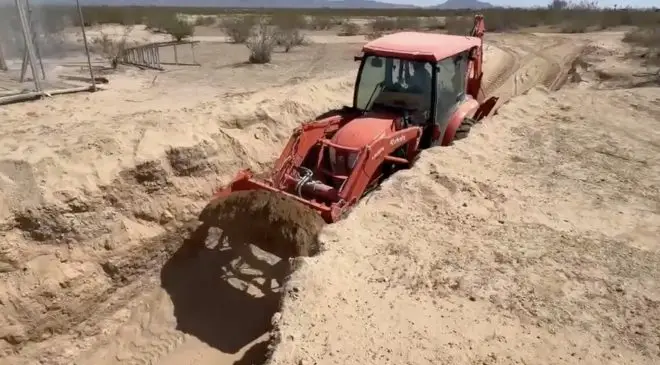
Geodesic Root Cellar: 16ft Sphere, Struts & Hardware Breakdown
In this episode of Occupy the Land, we dive into
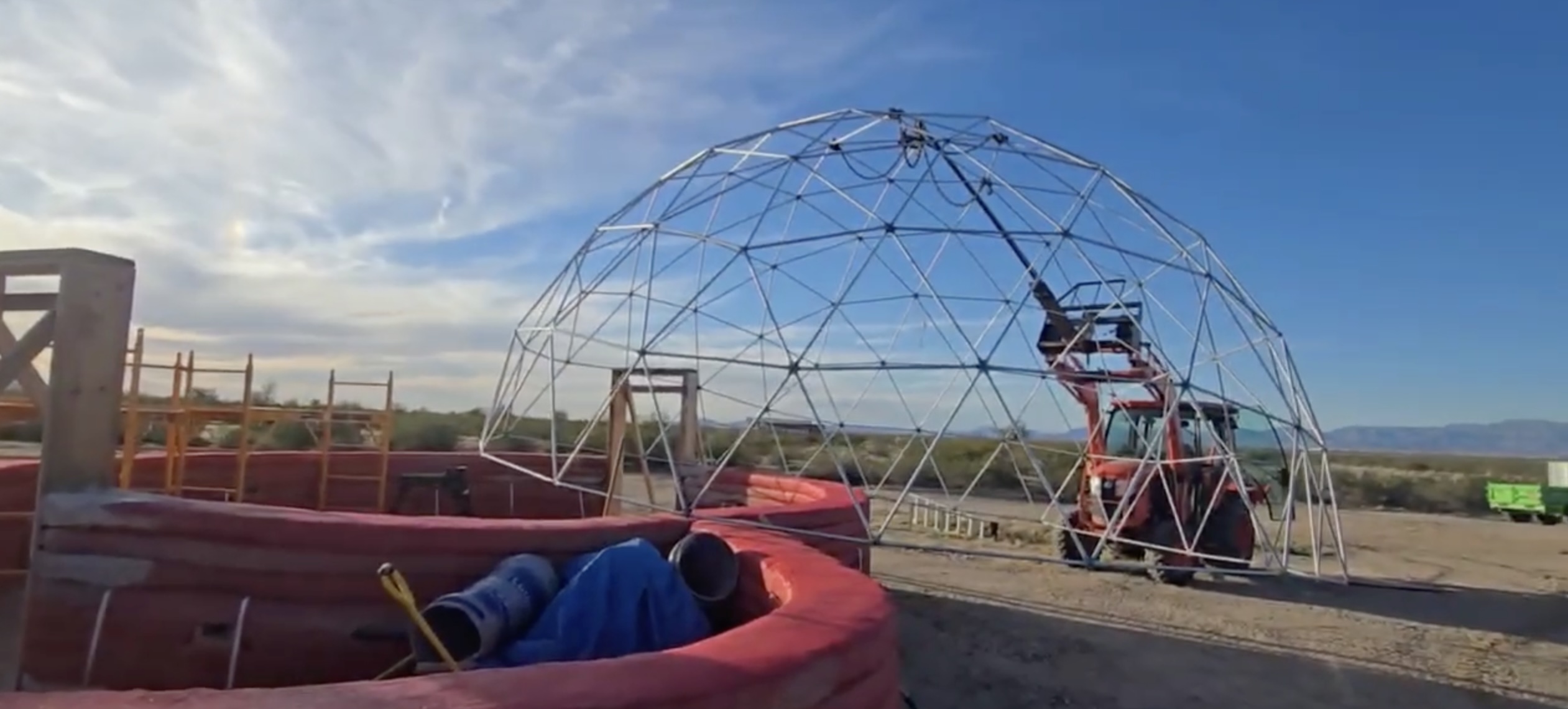
In this episode of Occupy the Land, we finally resume the guest dome build on our Arizona desert homestead with cooler weather making it easier to work! We prep and install heavy-duty hurricane straps (mule tape) between earthbag layers to cinch the future dome roof securely to the stem walls via a planned concrete bond beam—over-engineered for wind and microbursts. We place cleats and conduit for outdoor outlets, reinforce door frames with cement-heavy hyper Adobe mix, and get laser-level focused on plumb and level as we lay the next course of bags. Targeting two layers this week (three more before windowsills), we’re excited to move fast now that the workshop is powered and tools are ready. Join us for hands-on progress on our experimental dome while the desert stays peaceful and green! Peace.
Transcript
Well, we’re back on the land here and occupy the land. Occupy the land, dawg. Now, this is the, sand dam area, and the lower spot while we’re gone. Sprinkled a little bit, but you can see.
The moisture is just like an inch or two, even though the surface. And this is what we’re hoping to get where we can plant trees and so on. So that’s what this whole thing is for, is to retain that water so that we can do an orchard up there, and then a lot of it come down here for storage.
So we’re gonna start working on that. But first we got to get that dome on the stem walls. That’s the project this week.
Welcome not to try the land occupied land, dawg. Well, we’re back on the land, and, I had the backhoe on there because I needed it, to move it over to, where we’re going to be storing all of the farm accessories to the tractor. And, I had this set up because, that was moving stuff around, dig and stuff and stuff.
So now I need to change this out. But what we decided to do is we have, like, a lay down area back here by where all of the tools, workshops and so on are. That’s probably where it’s going to go. So what we did is I went ahead and got a bunch of jack stands. They were going to bring over all our vehicles, but we’re not using all of them at the same time.
So I want to I want to jack them up, put them on jack stands, take a little air pressure out of the tires, get them off the ground so that they don’t go bad. Because out here and you know, you’ve just be crap. I’m sure you need, you know, cover your vehicles. So I got, you know, the bungee cords and some tie down straps and jack stands and tarps and so on for we bring those over.
We’re going to start doing that tomorrow, and then the backhoe is going to go in this area right here. So that’s what those are for because you got to jack it up, get it in just the right area. So when you take it off it stays in our orientation. So when you back up the tractor it’s easier to put it on because, if it’s uneven paint, but which is why you need a concrete floor for between the workshops over here.
That’s the back blade, you know, for scraping the road. Nice. Purdy. And I want to get that back on. Here is the mixing bucket. You know, for us doing the concrete and the Adobe mixing and so on. It has a trapdoor in the bottom down there. And if you can see it. Yeah. And I have a garlic switch.
It opens it up and it dumps it. All of these, railroad ties are for the fencing, and this is like half of them. I already distributed them around the property where we’re going to be putting the fence post. This is A41 bucket. You know, my friend Jay was like, you got to have A41 bucket. And the reason is, is because it clamps, it opens up and you use it to grab stuff like these fence posts come in really handy with that.
I don’t have to have, you know, anything else to do. I can just grab one, put it where I want. Now, this storage, trailer is been where we’ve been keeping a lot of our stuff, and we’re emptying out what we need and all the tools that I had available and such. And distributed in between these two shipping containers.
And then the building in those red boxes is a, 30 by 60 by 22, that will go in between these two, is going to be a project that is going to be whenever the heck I get to it, feel like it got time. It’s going to be a thing. It’ll take probably three guys two weeks to do that, maybe last, but you know, and chat it a little bit and do the concrete footers and so on and the whole project and all of a sudden it’ll be done with these years.
But, these work containers, shipping containers are working well. And I need to get the, welding equipment all done up at that stage. Now I’m going to need to build the trommel. So I had to get a gas tank there for doing the MiG welding. So we got electricity in here, and, you know, things are going well.
I’m. I’m satisfied with the progression. And the biggest thing is I need a place to work. Now, this roll-up door, we’re probably going to put a concrete slab out here. That’ll be the first concrete that we do, because I need a flat area to do a lot of steel framing that I want to do for some windows and such for the build over there.
And then, the only thing I need to do over here, I think I’m going to move the compressor from here that’s over there and move the compressor over to there. And the stamp prep we’ve got reorient where we’re going to be doing different things. Now are solar for the, workshop’s working great. We just got back turned back on boom rock and roll whatnot.
Now, what I’m going to do with this water tank, I just need a place to, you know, wash my hands, get a drink. You know, put out the fires, whatever. And, this stainless steel sink is going. I’m going to mount a plywood on this, you know, metal tap those into those frames that frame, and then I’ll put that sink on there and, pump and, you know, get electrical to this, and then I’ll have, run a motor and I probably will put a shower so I can cool off because it’s freaking hot.
You know, even now we come back, I check the pool temperature, and it’s in the mid 70s. We’re going to be able to go swimming here. And it’s freaking first week of March. So, and that’s another thing I knew when I did this. This thing is going to bake now I got hasn’t got as hot as I thought it would already, but it’s going to be in the summer.
This thing is going nuts. We got to shade it somehow, if we’re going to be insulating it or whatever, it’s just for stay out of the wind and rain. But, you know, the heat. And I definitely got to shade this battery room because it’ll get really hot in there with the batteries. So we probably will have a fan that would be running all the time for that and shade, and I’ll take care of that.
So that’s another project that I got to do. And Donna, oh, we have her chicken coop to finish and get that metal roof on a third of that over there to keep them out, wind and rain, and then just leave it open in the front part. And then we gotta experiment on whether we’re going to be, letting the chickens roam free and be coyote food or if they’re going to make it or how much we got to protect them.
But certainly their coop is got cardboard cloth going down a foot now to foot all around it. So they’ll be okay if they’re in there. And then the, sand pond, we had just a little bit of rain, you know, a couple of hours. It was kind of drizzling and it, got wet in the bottom again. All the water is drained.
You can see a little bit. I didn’t sheet too much, but, so everything’s, you know, cool. Fine. You know, that road zone there is, broken piece because I was beating the crap out of going 40 miles an hour around all the roads, kind of smooth it out and so on, and, just testing it out and see how it works.
I got to weld that together, start making use of that again. So that main thing is, you know, I don’t need to get power. I got all the equipment, inverters and everything I need for Donna’s garden area. And I have these panels that we replaced with the bigger panels here, you know, over there. So those will go over there and she’ll have power.
But, like she called me while I was going, getting a tractor from a neighbor and she said, the lights will go on in the workshop. Well, you got to turn on the inverter and the battery switch and the solar panels and so on that go in. They have a breaker and, well, where’s, I’m not sure.
Yeah. See, that’s why you gotta know. That’s why you gotta know, you know. So we’re going to go ahead and build her solar and battery system when she’s motivated and able and got time. We’ll go over and do that for her area. And she’s going to be the one doing it. I mean I’ll walk her through it and so on.
But she really, really needs to understand how this stuff works. And it’s not that hard. She just, you know, don’t want to do it because I do it. Well. She’s going to have to learn how to do it. So we’re going to be doing that probably take you along for that ride. But we’re back on the land and it’s starting to get hot and starting to get windy, which is why I got a windmill generating, power.
And it, it says it’s 1500. That. Yeah, you’re lucky if you get 200 out of it or something, but it goes all night. I don’t want it so windy season like it’s coming up now. Did I wake up with full battery power in the morning? So that’d be cool. So we’ll probably be putting that up. We have, you know, our trailers are sort of like that trailer there.
We had a copier. Oh, no, we got that in storage. And, one of the shipping containers. Nice big collating Ricoh copier for communication out here. We’ll be talking about that later. And then we have, to take those and get a lot more of our stuff and put it on pallets and just keep hopefully, you know, for the next couple of weeks we’ll have all our stuff out here.
Not at family and friends, and then we can start organizing that as we build more and more shelter. So the main thing is getting that on top of that. So this is it’s going to be a thing. Can we do it by ourselves with the tractor? I don’t know, we’re going to try. I got a plan for doing it.
That was kind of the point that we can do all this by ourselves, but if we have to, we’ll get some friends. But, I think I got a plan, and we’ll share it with you.
Well, that might work. Let me just test and see if I can lift it and put it over.
And we’ll give it a shot. I think I’m going to need to get some stuff out of the way. I just wanted to see if it lifted up there. Looks like it might. I’ll let you know.
Well, hell, I got a semi on. Almost on. You know, I really need to take out, you know, the door sections. I, I didn’t think we’d be able to get anywhere close, but we got it up there. We can start customizing it and taking some of the, struts out for the doors. Probably going to put the door and this one here.
Over there. I bent a couple of struts, but the ones I take out for the door go there. We’re fine. So this is. I didn’t think I would get it up there. I just wanted to see if I could. Then I got carried away and went ahead and just put it on there. Now I got to take some of these struts out and frame it into the doorways on both sides.
I’ll give me some flexibility and then, well, use a tractor to kind of lift it up and place it, but I got this is awesome. You know, I was afraid this is going to be a I was going to have to disassemble it and re do it and everything. And having to replace 1 or 2 struts. I’m good so I can get on this.
Right on. So this is what we’re doing. We’re putting it on the bed I don’t have a good example. Here we go over here.
This will go around about the center around the whole thing is where when we position it then we’ll put rebar into here, tie this and put the frame up on both sides and do a bond beam about six eight inches. And that will be in there. Boom. And then outside semicircle, we’re going to do a different way.
But, you know, it’s hard to tell how big it is. Can you get inside and you got a coated and you see this. It’s big. So this went better than I thought, you know? Okay. It’s better than me having to disassemble it and strut it. And to be a pain in the butt. So this is I’ve done this before.
So this is not that big a deal. You just, unscrew these, put new strut in, and, but orientation you want and boom. So it’ll start rock and roll in from here.
Well, we got the dome over on to the stem walls, but I got to position it and I got to decide which one of these struts we got to take out to put the door in. It looks like it’s going to be this one right here. So I’m going to go ahead and take out the struts here, and then move it over the door frame and start connecting that.
And these are 180 degrees apart. That dome, that door frame and that one. Now there are different widths, but this one over here is that one that we’re going to take out and see which one. No. That one right there. Now that was a doorway we were using just to go in and out of it. When we were doing the work.
And that right there is going to go there. And once we do this and we start integrating it, I’m not going to get it up on, you know, the edge of the dome here and we’ll do the bond beam and so on. But this is why I needed the workshops, because I need to be able to fashion these struts, customize them to create the, doors and then, you know, like the windows over here.
And I got some bent struts I got to replace and so on from just putting it up. But this was a lot less work than what I anticipated. So we’re going to get to this. But then I have to do, over on the workshop over there, I got to create a concrete platform that I’m going to be doing a lot of customization, because here the window that goes in the, will probably be that that one right there.
I got to take it out anyway. So this would be where the window goes for the kitchen here. And, I got a design that fabricate that and get the welders out and so on. But the first thing is, is to get this place correctly on to this so that we can start customizing the bond beam that goes around.
And then we’ll start putting light switches in. And I’m probably going to do it through conduit three quarter inch conduit and put them up about this high you know here for the light switches and so on. But then we have you know, the outlets already placed. But then we put the bond beam on top and then we’ll hurricane strap it down and so on.
So there’s a lot of work that needs to be done. But the first thing is to get these struts, positioned to where the door frames are going to be integrated, and then we’ll start getting funky. You know how we’re going to do the windows, how it’s going to look, the patio that goes out the concrete, they’ll go on the outside.
I mean, it’s thing, but we’re at that point now to where we can start doing that. And it’s going to be these two struts here and here come out down here, this and this, come out, that one and that one. And then it gets integrated into that door frame. And then you’ll start to see what we got as a foundation to work with.
And then when we get over to the utility room over here, how we’re going to do the roof and here I got some ideas that will go into this other wall over here to create a room over here, and that’ll be fun. I’m looking forward to the as we’ve done this before. And it’s custom, you know. What are you going to do?
I don’t know, but I’m going to do it. And that’s what we’re going to be doing. And we have to integrate this door into it also. So now the fun starts. This was all the foundational stuff that I’ve done before. But then when you start getting into the shape of the building, the profile of it, how it looks and works, it’s going to be very cool.
Now this, I was afraid it was going to be too high. It looks like it’s a pretty good height. I’m feeling good about that. Now. This is where the, divider wall is going to be going here, and that’s going to be, you know, two by four construction, probably. We’ll do that. This is where the refrigerator goes counter around the kitchen and stoves, microwaves, you know, whatever attachments Donald got to have and can’t live without, we’ll put in here.
This would be kind of the dining area. And then in here in the bedroom, we’ll have a guest that goes all the way around to there and then picks up over here and the bed goes here. So there’s a lot of things that we want to do that and then we got to decide if we’re going to have a loft or not.
If we go ahead and have that wall, do we put a ceiling over the kitchen or over the bedroom? And this wall here is where, you know, the TV will go and so on. So it’s custom, custom custom custom custom. Get over it. Custom. But that’s why we’re doing this is a prototype for us building the home that goes on that pad over on the other side over there.
And that’s what we’re doing now. In the meantime, we also got to start digging a root cellar over, on this pad where the home goes over here, and daughter’s garden area and such over there. So we think we got an idea where we’re going to do the root cellar, because we need to put something in the ground, get away from the heat and so on, and to be able to put a freezer in because we need to have, you know, start, prep and preparation for storing food.
And, we’re really going to need that. So there’s so many projects that go on, but I couldn’t get to them till we do this. So we get this up, then things will start going quickly. But I need to have a work area. You know that the green shipping container over there has a, like an eight foot door that goes to the inside.
We’ll put a concrete slab there so we can do a lot of the customization work. So that’s where we’re at now. And, we’re making progress, you know, and this, you know, it’s it’s big. You know, this is going to be very nice. And you’ll see that it’ll be a comfortable living space here. And this would be like a guest home, the house.
But it’s going to do everything. And we’re going to have a laundry. Washer and dryer in there. We have a shower and a bath. I’m getting a bath. Just get over it. So we’re going to do it in a bath and a toilet and so on is in here. And we got a bunch of our stuff.
Now these hyper Adobe bags come in rolls like this. And this is only our second one out of ten that we started. So you can see we got enough to do all kinds of stuff. We got more check dams to do. There is a rainy season that comes up about now. Within a month, hopefully we’ll start getting some rain and we can demonstrate the flow of the water and how it goes into what we’re going to be doing, our orchard and all that kind of stuff.
But this is where we’re at.
Dome Prototype: Anchoring the Roof & Wall Layer Updatehttps://t.co/t3W5de9qJW pic.twitter.com/N8a1s4Nfqg
— occupytheland (@occupy_the_land) March 7, 2026
In this episode of Occupy the Land, we dive into

In this episode of Occupy the Land, we prioritize food

In this powerful, reflective episode of Occupy the Land, Ernie