


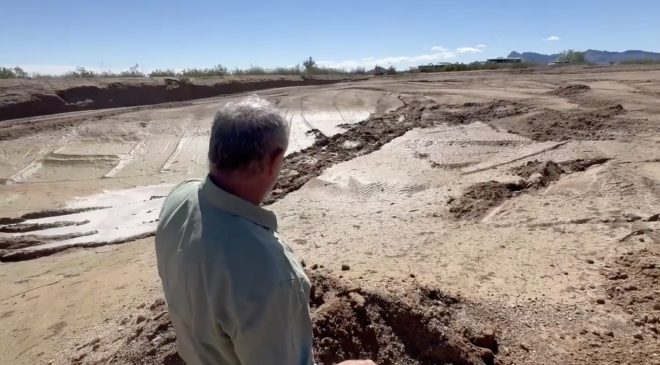
Sand Pond Progress: Clay, Gravel & Why We Dig Here
Welcome to Occupy the Land. We extend the dike on
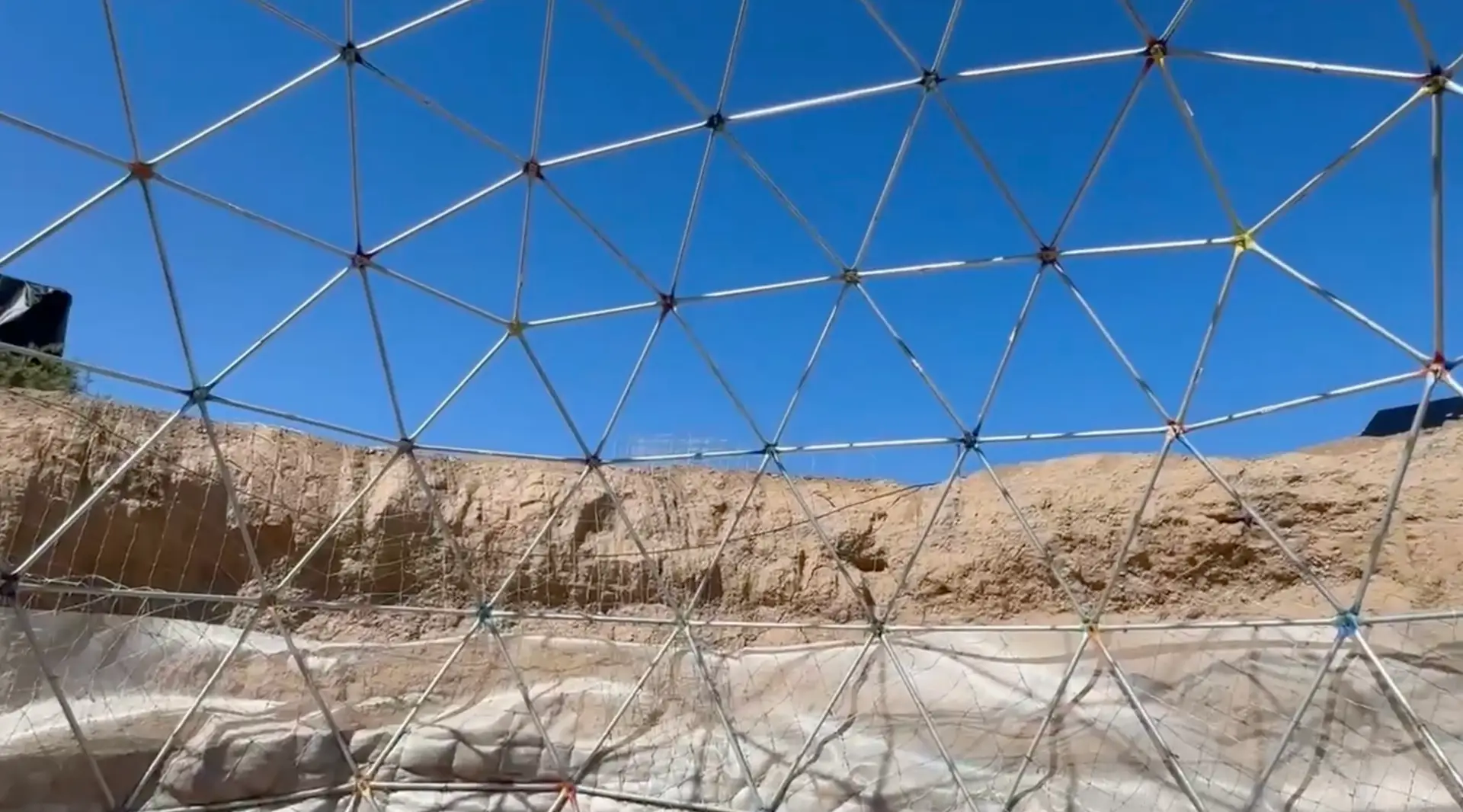
Description:
Transcript:
Saw these two birds perching on top of the old workshop dome this morning. They’re white. I’m not really sure what they are, but mostly what we get out here is hawks.
Welcome to occupy the land. Occupy the land, dawg. Now, what we’re doing now. Don and I are going to, you know, next step on the root cellar. The floor. What we did is we took add some extra trim for doing the struts of these conduits. Now, what we did is we took a laser level, and you can see that, you know, we put them down to where exactly where I wanted to have the grade with the gravel.
Now, it rained last night and there’s a couple of little areas that came in, you know, a little not big deal, you know, kind of needed it anyway. So what I’m going to do is you can see that I have here, and this is just like, I don’t know, half an inch deep right there. Then, let’s see this one.
You know, that one right there. So we’re going to go ahead and use this now that we got the water. This is a good time for us to help level it out. Then we’ll put some more gravel in when it dries out as we’re doing all this. It’ll be good to put more gravel on and then we’ll get it level and we’re all good and start doing concrete later.
Now, one thing that I wanted to demonstrate, you can see the only place where this stuff came off was here. And the reason was, is that it bulged out when we had a whole bunch of soil we put in before we let this cure, and it kind of. But don’t we just patch over it? It’ll be fine. But what I wanted to demonstrate is this.
We have been cranking on this, pulling this thing in ratchet in its hundreds of pounds of whatever, pulling the dome struts and make the holes match up the. And it hasn’t came apart anywhere. That happened right when we did it, you know, that was like, you know, right after I am really impressed with this stuff. This gets wet.
It’s been soaked. It’s been under water for a week and it just does not go anywhere. Now, you can see here that this has been pulled away from the soil here. So we’re going to have to pack that in. And when we put more in we’ll pack it behind. We can just, you know, put the soil on this side.
But we have to use so much to fill in this gap, it’s easier for us just to, you know, take and put this back down in there and pack it. So we have long bars that, you know, pack that. So us taking these big ratchet straps here and just cranking the living crap out of it. I thought I’d have to do repairs.
None. It’s amazing. Now, when it does get wet, you know. Well, it’s not really that soft, but, you know, you can wear it. I mean, you know, you can gouge it, but I we’re going to be doing more of this Dobie stuff here. I, you know, that had like 5% Portland in it and really made a big difference.
So I just wanted you to see that no matter how much it’s soaked, no matter how much it rains, that stuff is amazing. So we’re going to go ahead. We have just a couple of these that we have to do custom length, you know, a few inches on that one, a couple of inches shorter than that, whatever to make it match because it deformed.
And that’s what we’re using these for and propping it up with these. So we just have a couple of these done do that and then we’ll start playing with the entrance. But once we get this done that’s when we’re going to start using the tractor to pull the wire over and so on. But I just want you guys to see we got this pretty level.
And now’s a really good time. With this water level you can really see where you can get it. You know super level and then drama for gravel I mean we got to get to that. So that’s what we’re working on now I’ll show you a little bit after we get done. Level in this out.
All right. We had just enough water down here and we need to put some more soil to level it out. Now, remember, we had those little conduits that, you know, you can rake up against and you kind of get where it’s level. But this is such a perfect consistency for letting it dry. So we may work on this tomorrow, the next day and let this go.
But I wanted to try my new vibrator. Now I have one just like it, but it got burned up, so we had this one. I don’t think we’ve used this one before, have we? And yeah, we did, on the workshop. But watch what happens. Hopefully.
It doesn’t work as well on this as it does concrete when you concrete man just just levels it out. So I don’t think I’ll do they probably compact it a little bit better. I think I’m better off just taking the big rake and doing it. So I’m going to do that instead of messing it, because I had it nice and I walked all over it.
So we’re going to go ahead and do it with the rake. Now this right here is ground level. So we’re getting down to where I did want to have a little lip on it, because this is going to be a big, you know, kind of a ditch or a concave area that’ll drain into a sump pump area over here.
It’ll be like a 40 gallon barrel that I’m going to put down in here. So in case it does get any water in here after we finish everything that we can pump it out. But you can see, you know, this is about the size of the floor. And I got to reiterate this material holding at the bottom is awesome.
I you crank it. Still got a little bit of flexibility to it. It seems like it’s not cracking. I’m my new favorite material until I can find something better and as cheap like free.
So okay, this is a good time to show you the green.
Now this is the first one at the highest part of the land that we did. And, I just went down, brought this up, and it’s dry. I mean, a little moist, but it’s, it’s dry once you get down. If this doesn’t soak in, if you don’t have these, it’s just going to. And if you look down in here, you’ll see the, the powder.
Just go right back in when it gets a little bit more, then we can go ahead and, you know, expect the sides to stay on. Now, what I want to do is make sure that we get water in there when we do this. Now, I’m going to go ahead and do this again, and then I’m going to go forward.
The one that should be a little bit wetter. This one I don’t think got any water because, didn’t take the sides down.
Better now we’re going to go ahead. I’m going to auger this again. And then I’m going to go pull forward and do the next one.
It’s a dry now see that’s why we need these is to be able to get the water to penetrate. And it goes about a foot every 24 hours. And if we have a bunch of these in a grid that I have across the property, when we get rain again, you know, it’ll just keep going down. Now, I was going to put sand in these to keep them open, but I thought.
That’ll be moist. Maybe I won’t need to, but I might need to, you know, keep this open. This is the top ones. I’m going to go around and do a bunch of them, but I’m going to have Donna go with me to do some of the ones that have been under water more and see that it’s actually saturating the clay.
So we’ll go over there and check that out. We’re back in a little bit.
Okay. Now this is one that had some standing water. And we just want to see how deep it went and how much it’s penetrated because, the ones that are up on the higher part of the property don’t get much water. But we were hoping to, you know, we got to go babysit them a little bit more. But I want to try this and see how deep the water goes.
We got some water out of that one.
Sitting out stays open when it’s moist like that. That’s when we want to drop the sand out. That just keeps it permanently open. If you got it open to the top. Now, one of the things that people don’t know is that when you, have through your play in soil, when it hits a band of sand and gravel, it stops.
You think it goes down in the sand and gravel and then travel out. It doesn’t because of capillary action. It’s soaked like a sponge. It stays in that, tighter soil and it doesn’t go down. So I’m I learned that that’s that’s cool. So, what we need to do is to have got clear this back. So when it does rain, it goes down in there, but when it’s wet like this and we’ll go around and do these, I was thinking I’d have the, concrete mixing bucket on the front.
Just fill it with sand that we got over there and then, you know, back it up, do this, dump it in there, back dump it, dump it. That would probably be more efficient until I got to go. Keep getting more sand. So what I’ll probably do is go ahead and just do this, and then, maybe I’ll come back with, the dump trailer with sand and just shovel and take probably out of quite a few shovels, but we can go ahead and kind of dump it in there or do we’ll see what we’re going to do.
But you can see why we need to have the soil go down because up it’s a matter how much it rains or whatever. It just sheets off. So if we can do this and I can get this voice like we did with the trenches over there, and we’ll have stored a bunch of water.
Welcome to occupy the land. Or he wants to dig a fence post here. So this is on the north side of our property. So we’re going to dig just to say we did. We’re going to dig one right here. And just kind of like what we do with the, with the, the holes that we dig for the trees.
We’re going to put it right here. We’re going to go as deep as we can. It has to be as straight as we can as well. So that’s what we’re doing right now. Well, we have eight foot railroad ties and we need to go probably two feet under and six feet up. That would be ideal. So this is the first time that we’ve had the auger on that.
We can you know we’re doing some penetration holes for the water. But we’re going to be doing this in about a month. Start doing our fence. We got our railroad ties, you know, kind of laid out where we want. And I want to do one just to do it. So we’re going to go ahead and do it.
I need to get it straight and then we’ll show you. We’ll just. Put the post in, make sure it fits. I have another auger that’s larger, but I’d rather not. All right. Here we go. Well, I know why they use railroad ties for fence posts. They don’t go anywhere. They’re heavy. Man. Okay, this is worked out great. That auger is just the right size for this.
Pretty much have to go almost all the way down. You get the right.
Now the question is, do we just pack it? Do we use concrete for a little bit Portland in there.
Worry about that later. But I, I tell you they generally don’t you know, they just like there’s one right there that’s been there for like gazillion years. And they just put them in a packet and you’re done. Because these railroad ties, they’re so creosote and they don’t go bad. I mean, they last decades, centuries.
You pack that down and we put fence on stretch it and done. Okay. Now we have a good friend, another homesteader, Liberty community guy. Adam is going to come down. Remember, remember the 5th of November? We have several people come in to help on different projects. And this is his expertise, his fence building, because when he first did his ten acres and put his fence.
Wow, that was on, man. Was like a banjo string. No no no no no no no no. So, he’s going to come help. And I just wanted to make sure we had the right equipment to do this. I still got to buy some more supplies and so on, but yeah, that that is that’s pretty awesome. Yeah. We’re going to need, you know, big wrangling tools to be able to straighten it and position it and so on.
But we’re just she and I doing that in like three minutes, you know. Very cool. All right. It’s nice sunset. Enjoy that. And we’ll see you tomorrow.
Bitchute Link: https://www.bitchute.com/video/qsvkARtILaBv
Auger Day: Root Cellar Prep & Perimeter Fence Testhttps://t.co/0id2OJBFr3 pic.twitter.com/BsXxNe9gCz
— occupytheland (@occupy_the_land) October 24, 2026
Welcome to Occupy the Land. We extend the dike on
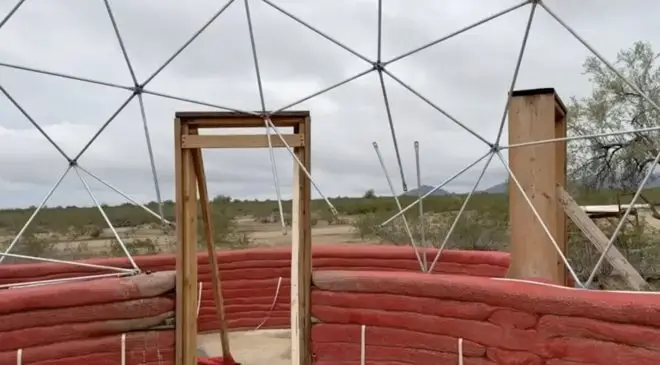
Welcome to Occupy the Land. After the rain we walk
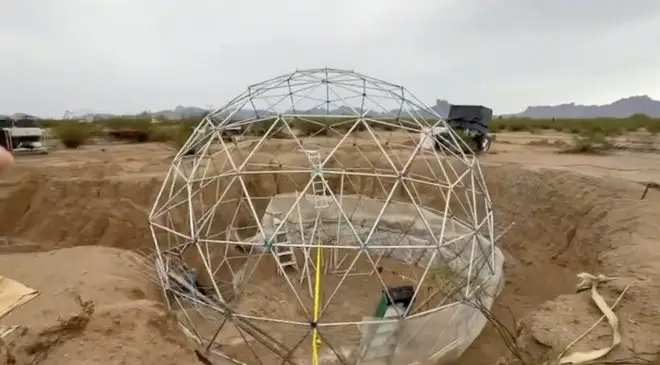
Welcome to Occupy the Land. We finish the top half