



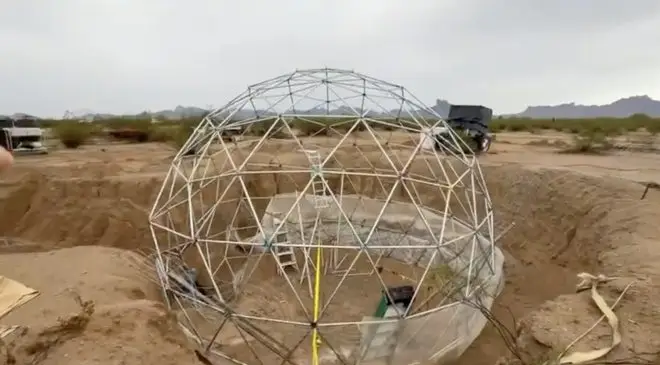
Tractor Lift Day: Completing the 20ft Sphere
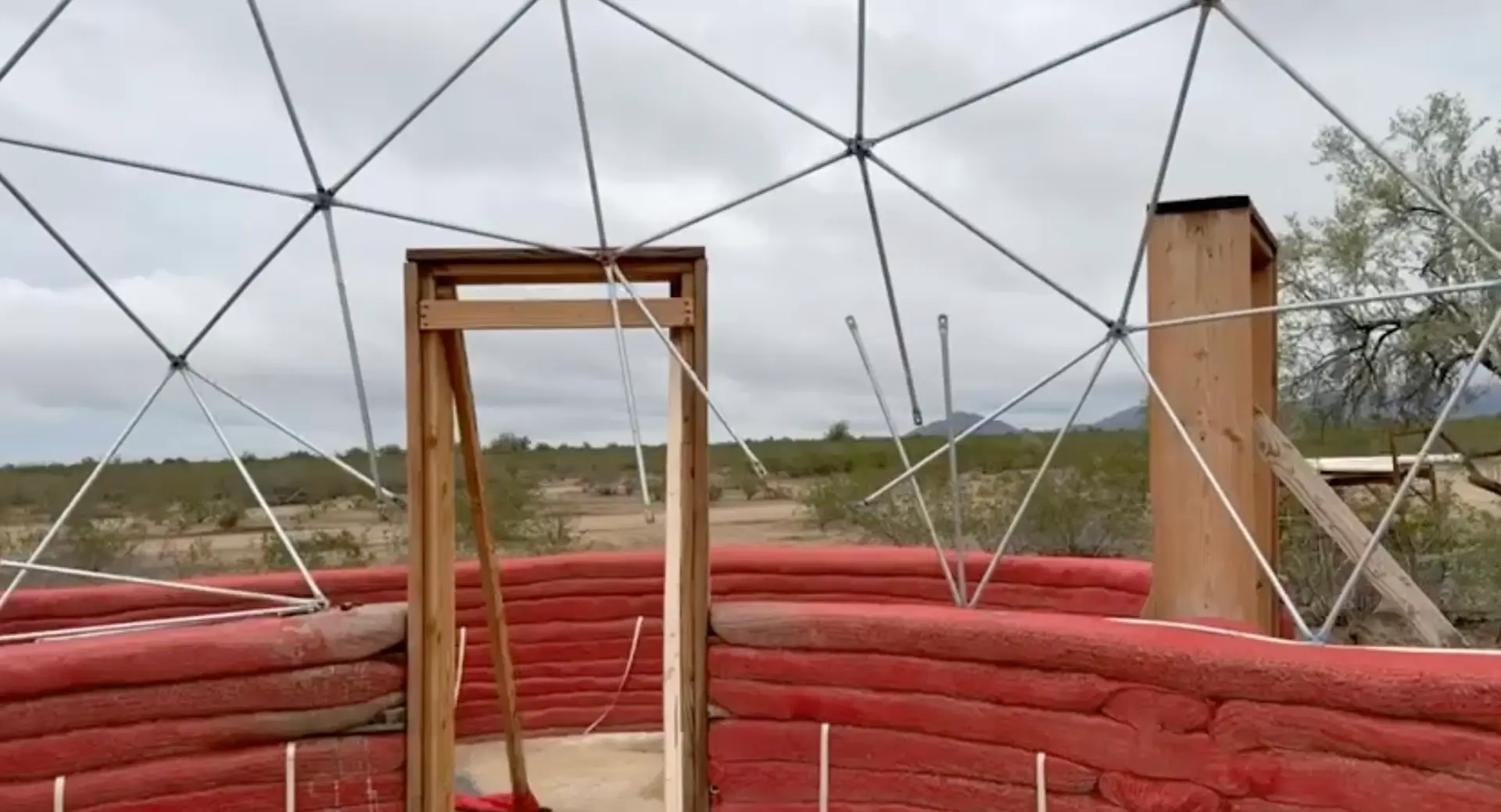
Welcome to Occupy the Land. We finish the top half
Welcome to Occupy the Land. After the rain we walk the south end of the 18 acres, from the southwest corner down toward the sand pond overflow. Ernie shows where the fence line and easement will go, how the runway bisects the property, and the difference between washes he has leveled and the natural side left alone. Flattening the flow keeps water from cutting canyons, drops silt and clay, and leaves sand and gravel that filters the water. Auger holes and future Zuni bowls will hold moisture for ironwood, mesquite, and palo verde. One inch of rain on 18 acres is roughly half a million gallons — the point is to slow it, soak it, and keep the overflow moving where it belongs. We finish with a look at compacting the house pad while the soil is still moist, using the back blade and front-loader float. Peace.
Transcript:
Okay. We’re at the top of the property. This is the southwest corner. You know, that’s up against the wilderness up there and everything and all the water that comes in. It comes across my land, down without permission. But even if we just shut that off, I mean, it’s still enough the way we got it done that over time.
But the extra, we’re just slowing it down. I mean, it’s still going off the property. Where the overflow on the sand pond over there, it just continues on the way it’s supposed to. Now, I showed you this before. This is the south end of the property. One of the short sides. Now, 60ft back, is where Donna is walking.
That is where the fence line is going to be, because you have to have an easement of something. Whatever. So this is what kind of bisects. It’s like two thirds of it to the left and a third of the property to the right, because it went between two washes. Now, this is a good time for Miranda to show a satellite view.
Donna and the family. They have their find me Apple, whatever the heck. And it updated where it showed after we had done all this. Now Google map hasn’t yet. Yay! I was like, not a fan, you know? I was like, damn it there. I’m not done yet. And they’re already mapping us out. So, we have a satellite view.
You can see we’ve, you know, zoomed in to where this is, you know, now is a good time for Miranda to put that up. And you can see from the top of the property that goes down, it’s 1000ft runway. Each side is about 1700ft and across the back, like 550ft. So that makes you know about it’s 18 acres, 17.9, whatever. 18 acres. So this right side has not been developed at all. So that’s what Donna, we’re going to go over there and take a look at, you know, what naturally happens as you just let the desert, you know, eat into the ground with the washes.
You. Now, this is kind of an educational part of how you can craft a desert, at least not how I’m doing it. You you should be doing this. What we’re doing. This is from the highest point on the property. I mean, I can go a little bit, you know, further, like, you see, that is the highest point of the property up there.
And I’m probably, I don’t know, 60, 70 yards. Well, that’s in a hundred yards from that. And then all the flow goes this way down to the other corner of the property, which is over there. Okay. Now this is what I wanted to show you around the property. You’ll see, like small, like indentations here where the water starts to sheet and goes, and it finds a low area like this, you know, wash area here.
Now, this was one of those kind of a feeder low area, but it had yet to become a wash. So I came through and drug it one time about a month ago and kind of all right, you know, we’ll kind of just help it go that way because what happens? The water starts to rush and then it cuts.
And I’ll show you some areas here where it happens and it cuts and it makes it, you know, like a canyon. And it, you know, it’s rough and it’s, you know, it’s not very useful and just keeps eroding down. So by leveling this, you get it to get the light stuff and the clay and the silt, and it starts exposing the sand and gravel, it’ll just, you know, keep getting more and more rid of the clay and the soil and the silt.
And then you’ll just have, you know, wash sand. Now, when these low areas here where it starts to sheet up, that’s where I do the holes with the auger for in the, you know, kind of take that water and penetrate into the ground and it’s working. I mean it’s like dam. So I’m happy about that. Now one of the things I wanted to show you, the nature of the water here, how it deals with it, is.
Well, this would be a good example. Donna’s over here. We can go say hey. So she’s taking pictures? Yeah. We’re not. It’s raining off and on today, so we’re kind of, you know, walking around and enjoying it because it’s really nice. I mean, she’s got shorts on. So this is what happens in these washes. The low spots get silt and clay and so on here.
Where it flows more rapid, it washes that away, and then you’re exposed with the sand and gravel. Now, eventually, the goal is to have only sand and gravel. You want to have a bunch of sand and gravel so that you can, kind of filters the water. You’re not moving mud, you know, and by the time you want to make use of it, you don’t need 1500 filters and settling tanks and all that kind of stuff.
They’ll even drink out of it, you know, because we’re not afraid. But the, what happens is this is what keeps building up and building up and building up and over decades out here, it got, you know, like 18in, two feet thick in a lot of areas, which is what I used with a dump trailer to build our roads.
Okay. So that’s how I did it. All this exposure to much you couldn’t get anywhere. And yay, Birdie’s here with a tractor. So by me leveling this out, it’ll do this more evenly. What will happen is it’ll just start, you know, slowly going down. It’ll kind of look like this, you know, and then it’ll start to get a little bit more finer sand, you know, and finer and finer and finer and do that.
It’ll take years because it’s like, you know, Arizona in real time. But which is only really 4 or 5 washes, you know, 4 or 5 floodings and it’s, you know, you get a rainy season, it’ll do it in one season. Now you can see that this is angled on the inside here is to the left. And it washed it away, you know, and then you.
But this is as big as the rocks I get, you know. This is it. I mean, this is. That’s it. You know, that’s how big they are. So you can just see if I go through this, I want to get to the point. Now, this is the newest wash that I’ve done. And it takes a couple of rains for me to get this kind of level.
So you can even see where you want it to have level, because if you leave it like this and I don’t go through here, it’ll start to gouge in in different places. You know, to be honest, it’s it’s already ready for trimming because, you know, we trimmed a lot of these, this one we did and this is the newest one.
But, this is probably the last one on this side of the runway. Now, you can see where it starts to go in. There it goes, you know, and then it’ll create a big delta, and I’ll show you. There’s a really nice delta up here. This is why it came up here. I wanted to show Donna this because when I came through it, looking at it, doing some of the other ones, I didn’t.
Yeah, I did drag this one the last time, and. But I left this part alone because I wanted to show Donna. Now you can see it starts to get a gouge in here. Up by where the. It met with the road.
There’s one.
I think there’s one back here, too.
After a while, all these kind of turned to be the same. Yeah. This is the one I wanted to show. Okay. It found a low spot in a high speed that came off under the property here from a wash, you know, right off the road here. It kind of drains this way and it goes right there. And some of it comes this way.
And then it continues down the side of the property and it hits about four more washes. But this is the, you know, the first one, the primary one. Get up. You know, the highest that I can on the property up here and start saturating all this. That’s why you see these holes and so on throughout the property up here.
Now this is just for indigenous trees. It’s going to love it. You know, I just take and make a Zuni bowl here. You go around in a circle with the back blade on the tractor auger a hole, put a ironwood, mesquite, palo verde there. And they love you long time, and it won’t take very long for it to get big because like these, I mean, you know, that’s how it goes.
So that’s what the plan is. Now as the water comes here, it’s kind of fast on this side because this is higher on the right here. And it did that. But watch what it does. It separates the soil out like it was a sluice. All the fine, you know, sand and silt and clay goes off. And then at the front, I don’t know what might be in here.
Maybe, maybe, maybe some gold. There would be some golden in there hills. Well, there is, but, you know, it’s probably not worth doing. You know, I don’t get to say that might be something to do today. We’ll get the, you know, the pan, the gold pan. You know, I think I have one over there and we can go ahead and just test it.
We did on, you know, the bus there now and then you see a flake, you know. But yeah, you know, it’s not worth it. But there are gold mines up there in the mountains. There’s gold mines still. You can see on maps they had and did and then they made it a wilderness and, you know, whatever. But, so I’m sure there is some something that’s not worth getting all excited about, but the, this eats it away.
All that you can see. Like, you got the clay, the sand, you know, the the dirt, the gravel, the soil. You know, you just you know, it separates everything out. And this starts to delta out. So it starts to drop the smaller stuff and it gets smaller and smaller and smaller until you get into like this beach sand here.
You know, that is really nice. Fine sand. What does this do more. You use this stuff for mortar. Now this is what it’s like down at the bottom of the riverbed. You know, at the main one, I can go get a big, giant trailer full of this. But you can see there’s the. The clay starts down here, you know, it’s got a front on it.
So this right here. Yummy. I can just go. You know where it is on land. I go get it and I do a little bit of something or something. So that’s why you have control of the flow and try and keep it flat so that this is pretty even. We’re here. Started getting flatter. It’s pretty even across how this would separate.
Now what happens this the other ones are probably a little more developed than this one. This one was one of the last ones that I did. It became obvious I needed. It was just so thick through here. I didn’t want to get the five and a half screw I. So tractors are for the tractor, you know, made it go work.
As I make this more level, you’ll see that it will expose more and more sand and gravel and it’ll be way more filtered water by the time it gets down to their plus, it saturates into the sides here. And the auger that saturates the soil. This will be wet. For how long, Donna? Well, the top no, I mean, when we dig down any amount, you know, and it’s a month, so I don’t know, six months, who knows I don’t know, I know it’s like down to the I go down, you know, after six months of no rain, less than a foot and boom, you know, it’s damp and feeding plants.
So that means I mean it’s millions, millions, millions of gallons that we have already stored. See, the thing is, if you have one inch of water on 18 acres, I think it came out the 489,000 gallons one inch seven times 400 since like, a lot. Okay. In the millions. Multiple millions. So this is what we’re trying to do is just charge this now, eventually, in our sand pond down there, it’ll probably all of a sudden a spring will start popping up.
You know, it’ll start getting so saturated, they’ll start leaking into. And we gotta make for that eventuality. I mean, it may take five years, but I mean, you know, it’s sooner or later it’s going to happen once that water gets down. And it sees the, the layer, you know, and it kind of, you know, it’s almost like a I don’t know if it acts like a bedrock or not, but definitely slower, you know?
So we’ll see what happens. But this is the time after just a couple of rains that we just get to walk the property, we get to see what’s up, you know, and we haven’t even touched that side of the property over there. There’s probably, I don’t know, at least a six acres or more that we left natural. Now we’re going to go over there now and look at the washes.
Donna wanted to see what they’re like when you don’t mess with them. You know, because I don’t mess her with the guy. But, you know, I left that, you know, messed with. So we’re going to go take a look at that.
70 years ago. This was, you know, this is private property out here, and this was part of the open range and the cattle drive of part of the year, the winter of they, you know, had these little stone cabins and so on around here there’s like 3 or 4 of them around here. So that was a property, somebody actually doing that bed frames and stuff there.
But the cactus keeps getting lower and lower and lower. At some point we’re going, look man, we got it. We can save it, you know, do something with it. So, you know, this is the the very south part of the property. Now, this is what I was talking about as we cleared the road and so on. We got a lot of this brush, you know, this is, you know, like over there and so on.
This is the brush that’s going to go into the trenches and get burned. Now it also shows you how the water starts to sheet in these little areas. And they all come together.
And there’s some more biomass we need to take care of. Now you can see it just comes in off of the road. It comes here. Whatever. I don’t divert and it starts this. This is how a wash starts. Then it meets with another one, then it starts to go. Then it gets bigger. Now Donna’s gone down there, she’s exploring.
She wanted to see what they look like. And this is what they are kind of naturally. But they just dig a big V and they start to rip up trees like these are dead, you know, from getting ripped up and, it goes around and it meets with the other ones and it just really eats up the land.
And that’s one thing. A lot of the land is like this, you know, really bad, you know, it’s almost unusable. You’d be forever with tractors and bulldozers doing stuff, but this one had a gradual enough that you had a a few of these and it was fine, you know. So whatever I did on that side, on the other side of the property over there is just managing ones that maybe not this bed, not the same, you know, they were about the same.
So we went ahead and got it to where it would stop eating down into it and into it and not make it to where you get the most land use out of it and kind of leveling it out, you know, for whatever you want to do. This part we just left alone, you know, to be go all natural and then we’ll see what we want to do later.
But you can see over time and it won’t take very long. I mean, you have a few monsoons. It just keeps getting worse and it becomes almost unusable. You can’t, you know, do a lot of roads without bridges. You got all kinds of erosion problems and everything. So I’m like, yeah, yeah, we’ll fix that. So that’s what we’ve done.
Now this is meanders around.
There’s some old time or something.
And that was amazing. My tractor I mean like a little at a time using the front the back of whatever. Eventually you get through all this because, I mean, you know, some of this is, you know, tracker didn’t light, but it did it, you know, I didn’t abuse it too much, but, I mean, it was capable. So. Did you get an idea, Donna?
So what do you like, manicured or natural? Better
what water does and how good it can be and how destructive it can be.
It’s all just amazing. But it’s. But for us to be able to, manage it in such a way to our needs. Yeah, yeah. Where’s that tree out there? Yes. Right there.
This is how it’ll it’ll it’ll kill it eventually. Like it does. You think that being on the, you know, bend of a wash or river would be, you know, and, and it is in a lot of ways. But sooner or later it, you know, you look out across, you know, that’s where they go down. But usually there’s so many others that propagate around where the water is really make any difference.
They just consume some of them. Yeah. Here’s a good example.
Not very deep. Just a nice little wash. And it kind of angles it through here and down to the
road. Yeah. But it’s gonna be.
I’ll watch it over the years. But you see this water if it gets, you know, through this gravel and so on and nice little trickle whatever. It’s pretty clean standing water over here. So standing water only
a little bit. I mean, that’s what it looks like now. Maybe it isn’t. Sorry. Just wet. This is a bigger wash. There’s just more flow.
Yeah. Now this is on the other side of the runway. So we’re that’s why we had to put the runway there. Because it went, between those two washes and those have been around, you know, I call it runway because we’re going to be doing. I get done with everything else exploring with ultralight. I used to fly ultralights and, you know, that’d be a good way of doing it and find out where I want to go because it’s I mean, damn, it’s, you know, it needs an ultralight and makes a good parking lot and, you know, turn around the area and everything.
So I was like to hang out here. Yeah. No, they’re always laying down here. And so we haven’t trimmed this up at all or anything. You know, this is a pretty hefty tree. But this is you know, it’ll eat that away. And and she’s gone. So we’ll go ahead and do what we can to kind of, you know, we haven’t done anything up here.
I did do a little bit back here. Yeah I just put it up, you know, kind of block it off a little bit. So it would settle here. It’s cutting in it would, you know, deposit a lot of soil more and kind of help build this up and it’ll be fine.
So I go ahead and just made it a little lake here.
It cuts through sooner or later. Break through. And then it goes down where everything else goes.
But just wanted to give you a thorns. I just wanted to give you, you know, just kind of an idea of where we’re at and how the desert works and how you can manage it. You know, it’s, it’s not real difficult.
You just can’t do it all. Everybody brings in the bulldozer and the lasers, and they do it, you know, two months and we’re done, you know? And I was like, I got a lot to do. And we just do it a little at a time. And during when it’s ideal, you know, like, right now I’m going to take the tractor and go out on where do you want me to do.
Oh on the, the road up
there, I don’t know, you can’t really do
he really being whiny because this is like nothing, you know. But she’s so
used to perfect roads that I do.
So anyway, so I’m going to go up there and do that and have some fun. And it’s a good time to do it, because when the soil is more, you can cut it better and carve it, but it’s also a lot heavier and the tractor works harder.
So it may not, you know, go as deep when it’s drier, but it’s not also, you know, hauling, you know, really straining. But so you kind of be careful with that so you don’t overwork it and, you know, break something. But I think break it, it just, you know, get hot. But, we’re going to go ahead and out and do that and we’ll call it, you know, day with you guys, but you get the idea.
Now, up to three days, you can really carve the land when it’s moist. After that starts to dry out a little bit, you know, you get a couple inches down before it gets moist, but you got a good week or two that you can really. In fact, you want to wait till it dries out a little bit. In about ten days I come back and I could just really nicely polish it.
And then, you know, my friend Jay helped make a, you know, for me a, it’s called a road hone. And it’s just I pulled around. It just makes it all nice and purty, you know? So that’s what we’re working on. We’re having fun and enjoying ourselves. We got rain. Do we get rain? We got rain. Peace.
Well with what we’re learning. Doing the root cellar. We’re getting an idea of how we want to integrate a lot of things into the prototype bedroom utility laundry room. But, we’re ready to get going on this as we finish that.
This is a perfect time for me to compact it and drag this property. We’re not going to be putting more material on it for a little bit, but now is a really good time to compact it every time it gets moist like this. You want to do that now there’s two different ways here. Take a look. When I take the handle, the control, joystick and push it all the way forward and then click.
This floats. It won’t it’s not just locked in one area, just kind of floats. I did not know that until a couple of weeks ago when I had it. For sure there’s something wrong. It sticks down. He goes, well, that’s your front loader float. And I go, well, they didn’t have that in Kubota class, you know? So, I missed that part, but it’s very useful to where I can put it down and just have this float as a back up.
But fortunately, I haven’t had to do that. I was doing it kind of manually, kind of controlled, but I haven’t had to do that because I got this back blade. I would have figured that out a lot sooner. So this back blade, it does a top and tilt so I can kind of craft everything now when I got here.
Now lift up these rippers and I got it tilted back a little bit so it back drags on this blade. So it puts quite a bit of pressure on it you know. And that’s really good for compacting. And I really don’t need the front one to use out here I, I don’t think I’ll need to, but that’s what I’m going to do.
And Don just show a little bit of that just so you get an idea. Was that.
What a nice day for us anyway?
Bitchute Link: https://www.bitchute.com/video/Oo22zGeDtAR6
Undeveloped Side vs Managed Side — Same Rain, Different Resulthttps://t.co/phadyVGNkn pic.twitter.com/LzC4sFXfRZ
— occupytheland (@occupy_the_land) October 9, 2026
Welcome to Occupy the Land. We finish the top half
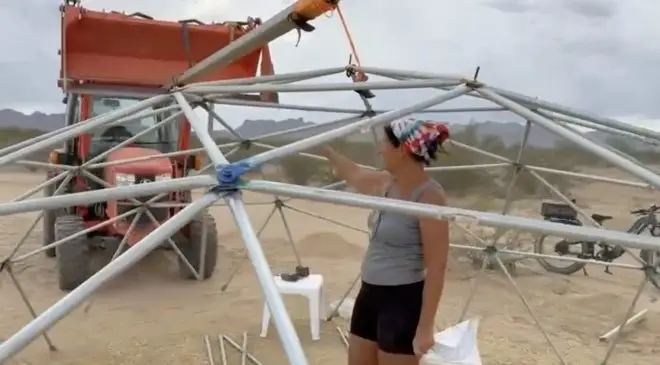
Welcome to Occupy the Land. Donna and I assemble the
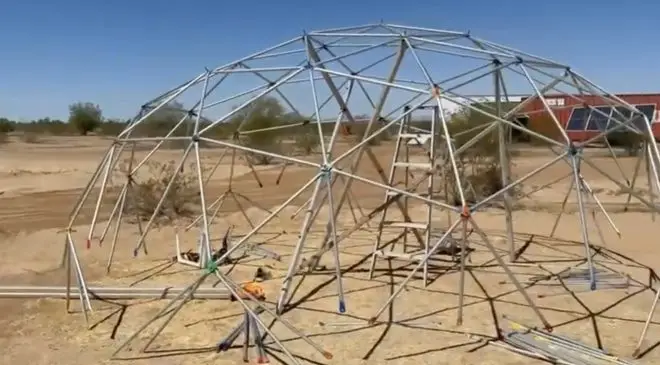
Welcome to Occupy the Land. This week we turn the