



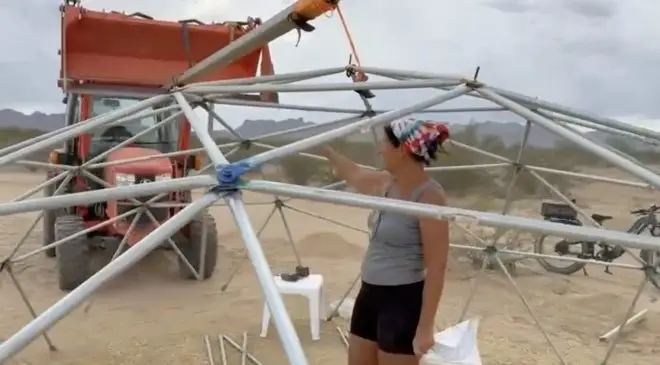
Assembling the Top of the Sphere + First Real Rain Test
Welcome to Occupy the Land. Donna and I assemble the
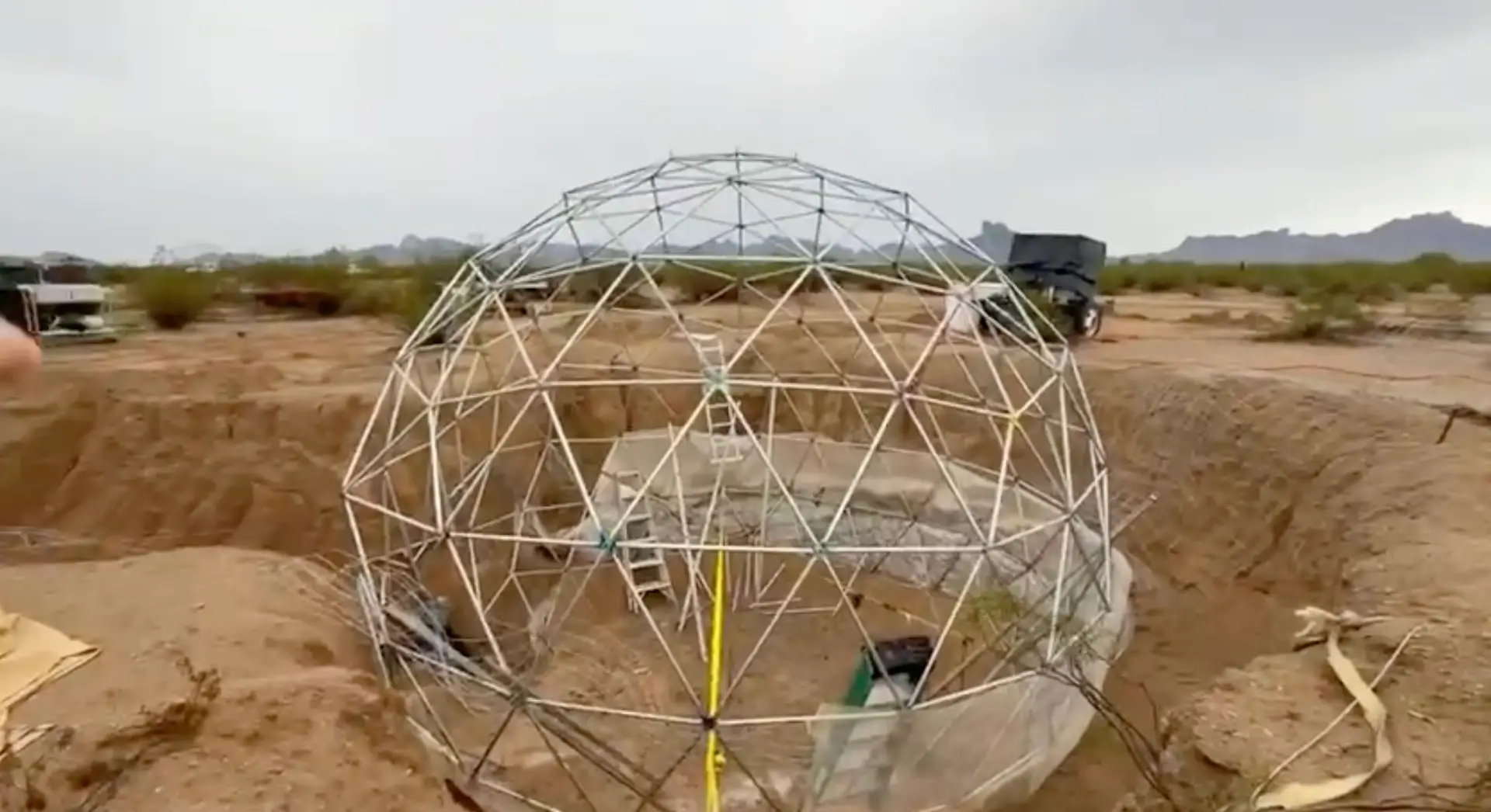
Welcome to Occupy the Land. We finish the top half of the 20ft geodesic sphere, lift it with the tractor, and bolt it onto the buried lower half so it becomes one structure. A few custom struts get shortened or lengthened so the hubs line up, and the extra hog fence is ready to wrap over the top and tie everything together.
Then the rain arrives. We walk the dikes, orchard trenches, potato patch, and sand pond as water sheets across the land, settles silt, and soaks into the soil instead of running off. One good storm shows where the topography still needs work and why the pond liner and biochar trenches are next. The sphere frame is up; the water system is starting to prove itself. Peace.
Transcript:
Welcome to occupy the land. Occupy the land. Well, today was finished putting up the the dome. Putting those struts together. Now, how it’s done is the bottom of this. Shares the top of the other dome. So we’re going to go ahead and try and lift it with the tractor. I know we’ll lift it, but what we need to do is get close enough to put it down.
And the tractor not following the whole. That’s what needs to happen. Now these aluminum struts, I mean, the aluminum two inch square tubing that we have is great for we use it for all kinds of stuff, but to take pressure off of it so the we didn’t have to worry about it moving or anything. You know, we just put it up there and cinch it in and it supports this.
So we were lucky to have that. Probably the best thing to do.
Is in the past we’ve taken like a 20ft pole or we do a T with 20ft two by fours, you know, make a kind of a T out of it and you put it in the ground, put it up, and you run guy wires at least three to kind of hold it in position and a pulley system at the top, and you just pull it up as you’re working it.
But we wanted to try this and we’re lazy. So what we did is I put some, channel, you know this? God, what do you call this unit strut? This is a double unit strut. Really strong on the edge. And I put it on the bucket, and then we just kind of lift it up that way. Now, what we’re hoping to do, and we’ll put it on some time lapse, is that I’m going to go ahead and lift this.
Just go around to the other side of the root cellar there, come up on it and lower it down. Now for lucky, we won’t have any problems and we just take and start putting 4 or 5 the struts together and hold it, and then we’ll put the wire over it and you know, it’ll get us four along. And, can we do it by ourselves?
Theoretically. But if something goes wrong, you know it’s going to be a thing. So, Donald, just stay out of the way. And the worst that could happen is, I don’t know, some struts get bad, it falls. We bust a strap, whatever. Nothing that we can’t recover from. You know, just make a couple new straps and put it on.
So that’s what we’re going to do. We’re going to go ahead and just let these fall away when I lift it. And then I’ll take it around over there. And if we’re really lucky, I think we got a good area over there that it’ll just lower down onto where we need to connect these to the top bolts over there and we’re done.
So we got it all ready for it. So that’s what we’re going to try, which is luck.
Okay, well, it’s time to start integrating the upper part of the sphere. And you can see, you know, I’ve got some of them done here, but you got to kind of match it up. It’s not perfectly, you know, level and so on. I’m going to have to lift up, you know like here. And you lift up this side and pull in this and so on.
Donna’s not here to videotape a lot of this, so I’ll put some time lapse on it and try and get you some close up. So you see what’s up. Now what happens is these struts these two got to go to that hub. Well I can crank it and bring it in to where I need it and then connect it.
Now I’m going to be doing this all by myself. So I can’t do a lot of videotaping, but I’ll get you, you know, some. And Donna gets back and we’ll get you some close up of it. But it’s pretty simple. I just take that bolt the nut off of the back end, put those two on it. But the bolt back, the nut back on since you down, boom.
Go to the next one. So that’s what I’m going to be doing. I have like half a day to work on this. We got a family thing this afternoon. Donna’s getting her truck worked on. And so I’m going to go ahead and try and do it by myself. Just take my time a little at a time on junction at a time.
And it would be nice to get this done so we can start backfilling up to the mesh level. And then, you know, things go pretty quick. I don’t know when we’re going to do the floor. We’ll go ahead and put some more gravel on it. Try a guy about a half inch more to level it out, and then we’ll go ahead and start working on the doors here, you know, and just a little bit at a time.
This is what keep me occupied today. And it’s still warm. I mean, you know, sweating. We’ll be right back.
Welcome to occupy the land. Occupy the land org. Now, what we got here is it’s raining. You know it’s not. Oh my God. Cheating, flooding, raining. But I got it built up around so it’s not flooding in here, but, we got it. I think I got, I got two connections over there to finish, but, you know, it’s done.
And then we’ll start on the doorway here. Start taking all this fence and wrapping it over the top part, because that is made to wrap over the top part and combine them. Wire tied. Man, we still got lots of work to do, but there it is. And you kind of see how much of this is going to, let me get off the bike here.
How much of this is going to stick up above me. Get down level here and you can see about that much is going to stick up and you’ll be able to you know, the floor is going to be down. About one run down like this is ground level right there. And that is the floor level. The next one down to there.
Now, I was using these square tubing to kind of position stuff and ratchets to pull and everything to make sure everything met. I had to custom make it two inches shorter, three inches longer on a couple of struts over there, but it comes again. It’s fine. So we’re going to go ahead and start with some fun stuff on the left and right side of the doorway here, and start integrating that, because you can see it’s going to go right into it.
The rain is good for compacting all the soil and getting around. Once we get that fence over, then we’re going to put the mesh around it and finish that, get the door done and then we just start backfilling it. Boom boom boom boom boom. Then we can start worrying about, you know, what we’re going to do on the inside.
But the big thing is the floor. We have trusses that will come across at the that level there, and it’ll set on the ground that is compacted around here. I’m going to try and go for not having a center post. That is my goal. And and we can do it. It’s just how thick it has to be going to be like 12in.
But once we design an engineer, those trusses, they will also be used for the bridge that’s going to go here. Now that bridge is also shade for in the summer, man, you’re always looking for shade and to be outside and sit down there and outside of the dome doing some work and going in. And this is all root cellar storage and which is good because we got a lot of stuff we need to store, and I want to go buy some more stuff and get stocked up for years of years of years of Ernie’s got here.
So that’s what we’re going to do now. It hasn’t flooded. Flooded, but it saturated the soil. There’s a last few rains have done to where when it gets a nice dump going. And it may here in the next 40 hours or so, then we’re going to get a wet fur and we’re going to see where all the water goes again.
After I’ve done some crafting of the topography and fixing some stuff and overflows and everything, but this is it’s getting to the fun part. You know, this is just being paid. But but, you know, we just take all this, put it over wire, tie it down. This thing’s going to be and going anywhere. So that’s what we’re doing now.
Donna and I are going to go do a water run. I want to see how the roads are done. Last night I was out repairing, some drainage for, you know, the cowboy now, here, you know, you see, way. That’s the roundup, where they have the cat. You can see how green everything is getting now. He needed some help on one of the drainages down there, and I wanted to go check.
And I got stuck with the tractor a few days ago. Don, I had to pull me out. And I mean, when you get stuck with the tractor, you’re stuck. And so we’re going to go ahead. I went down this afternoon with him, went ahead and fixed, some of the drainage to make sure it goes to some of the stock tanks they have for the cowl.
You want to divert it to where? And it’s full. They had two big giant ponds, like, you know, almost lakes that were filled up by the last rain. So they were really happy with that. So, you know, less dead cattle. So we’re going to go ahead and go on a water run. And I’m going to go ahead and take you with us.
And we’ll just show you a little snippets of what’s up. Now this here.
Is a dike to protect this not flooding, you know. And I’ve had, you know, success. But there’s always, you know, a little bit more. You bring up a little bit over there. And so the side road that goes down to the north part of the property doesn’t leak into here, but this creates a lake out here. There’s a bunch of all this land that goes up to our property line, which is like 1000ft up there.
I can keep that wet and then do what they call Zuni bowls, which is like indentations with kind of a berm around it for more trees, desert trees. I want to plant up that way. It’s going to be be a green postage stamp from space. Occupy the land. Now over there is with the orchards going in those trenches that we did, we were this week thinking, we’re going to go around and pick up all the brush that we piled in different places, you know, you just see little pieces of it, you know, like there.
And so we just get all the brush, we have lots of piles around and start filling those trenches because now after it’s really got soaked and wet up there on the, the orchard part, that we can go ahead and burn the brush, get the biochar, cover it up and start planning. Donna, even though it’s raining a little bit down, it’s just drizzling a little bit.
She wants to finally get her potatoes in the ground. The potato patch over there. Because they started getting eyes on him. You have to leave him out, cut him in half or something, and they start to get, you know, growth on them and boom, you plant them. So that’s what she’s going to be doing over there. And, even though it’s raining, you know, we can’t, you know, sit on her, but there’s other things that we can do now.
I went ahead and made, you know, kind of indentations here a little bit more to make sure control the water, because I was having to go places. I didn’t want it. Now I just want to show you. Yeah. These are the trenches that we did for the orchard. It rains a little bit and it starts to pool up.
Boom. Those flooded. All this is saturated with hundreds of thousands of gallons. It is in the soil. It did not run off because we cut it. Now what happens is you going to see that the washes they flow muddy out. I showed you in the last video you see, you know where you got it kind of slowed down and it’s going over the gravel.
You drink it you know. You know even this standing water is pretty clear after it settles. So you can see I really, really, really, really wanted I drink that. So, when it flows all that brown silt and clay and so on just starts coming out of it. So like, we’re here, I was stepping all this mud kind of goes out and we go in the settling areas that I can use later.
I take out and put somewhere else where we want it. Now all of this will eventually turn into wash sand like this. As the water flows, it washes all the mud and silt out and you accumulate that and then you just leave it alone. Then there’s at some point, I’m gonna have to stop dragging this, and I want it level and wide like this, because instead of cutting in to the ground, it just kind of flows over it more slowly and evenly and gets rid of all that silt.
And by the time it comes out at the end of the wash, it’s clear. So that’s what we’re doing here. And you can see how some of this, you know, settles in this area. Now, we haven’t got to where it’s flowing yet. So let’s see how much it’s starting to accumulate and if any, because this was, you know, tens of thousands of gallons here.
And then we just let it go. We need the pond liner. It just goes away. Yeah. That’s all it’s left there. So you can see how much how high it was up. And it went up to the edge of the road over there. And it gets to a certain point that it starts to overflow, which will definitely happen over time, especially as we accumulate that water.
So I will be taking the clay out of here, and I think I’m going to save it and put it in a certain area because you can use it how you make pots out of it, you know, I mean, it’s, you know, it’s fine now. You can see as it rains, it washes off the clay how much gravel there is in this, you know, that’s what the trauma thing is about, which I went and got a bunch of steel for building that.
And we’re going to get on that here directly. Now, this is a raised dike that separates the storage area from where we’re doing the orchard. So this goes down quite a bit. This is you know, I mean I’m it’s pretty high dike. Now you can see you know, it already starts to get material and stuff in there. Well we’re going to go ahead and put in a bunch of brush, burn it.
Once it gets going, then you just take and smother it with the dirt and it turns in to charcoal. So you get biochar. But you can see a whole bunch of organic material is already coming in here. I just take the tractor and pull this stuff over and boom, now we put some brush down there just to get it out of the way from somewhere.
Yeah, yeah, it’s not even really muddy down there, buddy, but that’s a good soil. You know, this is top. It’s fine. Now, this is, you know, the rabbit poop that we put in here. We really did this one up as an experiment. And that’s that fire that you see in the intro. Outro, you know, shows you when we did that and then this one didn’t get enough water.
So I, you see, I kind of took the tractor and did more of a ditch. So when it was a potato garden Don was going to be working on, I did this ditch here. So hopefully we get a nice little rain. It’ll go ahead and flood this one. That’s what I was hoping for. The flood, this one before I started, you know, going to the next step of stuff.
So Don and I is on our way to go get a, you know, batch of water just to make sure we need for a lot of construction stuff more than anything else. But, these washes, this is one here. There’s like three over there, one there, over there. The side row comes in right there. And then on the back side, you know, there’s another wash there, there, there, there.
And they’re all placed in such a way to do all the work for me. I don’t want to have to pump it back up to where it was already at before. That’s just done. So that’s kind of the tour where we’re at and we’re glad it’s raining. And, it changes a lot of things. And, you know, we put some things on hold and get ready to do some other stuff, and it’s so much easier.
Even though it’s a lot heavier on the tractor, it’s easier to carve all this when it’s soil like that as opposed to that rock hard freaking concrete crap. You know, I wait for this. This is only like, you know, every time it gets a little moist, I come out of the track, man, we’re getting some stuff done. Well, that’s what, you know, like over here.
Just so it didn’t go down that ramp. You know, I kind of build up a little dike so it’s not going in flooding the root cellar, even though I still need it to stay wet in there because it helps compact everything. So I’m feeling good about that. We’re at a good stage for it. Woo. And it gets muddy.
So it’s all water work. So most of the time that I spend on the tractor is moving soil from over there and putting it where I need and want. Now, the first six, seven months, you know, the most of it was done in 4 or 5 months, was me bringing sand and gravel from the washes within a mile or two here and doing at least 150 200 loads piled up of sand and gravel on that dump trailer and putting it on the driveway system here.
That was I mean, you know, it’s a thing already. I’ll take forever. Well, not forever. Well, we’re getting it done. Hey.
This is one thing I can demonstrate and show you as these washes come through. You can see how it takes out, you know, the clay and leaves the sand. And this is where I would get a lot of sand and gravel, you know, for doing my road. So it wasn’t mud. This just goes down. It’s like beach sand and it can get too deep.
You can get stuck. Very easy. So here you have. Yeah. That’s someone’s road that goes back there. You can make it. And then the wash that continues across the road here.
This was the first land.
Right at the end of where the county would maintain the road. So the greeting guy would come out from the government, and then he turned around right in front of whatever we were doing. And I’m going, and maybe not, we’re not far enough to. So that’s why we chose to go like a is it like what, three miles from here?
Six. Six miles. It’s six miles from this turn here that we’re making. Back there was the land that we were almost got. And you can see this is where pipeline starts. And you see, you know, they got now shalt not do it, you know. So here I wanted to get out.
So this is the road here that I don’t maintain as far as anybody knows. But this is, you know, all public land back here. It’s a wildlife and eco preserve or something. It’s a wilderness area. That’s what they call it. It’s called Eagle Tail and that’s courthouse Rock. And we just had straight out Centennial, which is the road to get to this point.
And we go that way three miles, and then we get another three miles on the private road that I maintain. So this is the part that I wanted to inspect to see how much guerrilla repair needed to be done, but it looks like it would be all right.
Does it have a lot of kickback or thrust on you? Yeah, I let go. Go on everywhere. It’s a fire hose. Yeah. No, it goes really fast. Well, a lot of people don’t know Arizona from all these valleys. You know, the mountains around. It funnels the water down into the valleys, and we got 40 years of excess water.
If it just stopped raining. Now that we could supply our needs in Arizona. So it’s all propaganda and politics and blah, blah, blah. You look at that Arizona state seal. It’s agriculture, mining and ranching. You know, I it’s the state seal because it’s known for what people don’t know. Number one in lettuce for majority of the year out of Yuma is from this kind of water lettuce.
Number one, top three in the nation production of lettuce in Arizona. Now, cotton was number one. You know, for a long time. I don’t know what it is now. Citrus for number 2 or 3, depending on the weather in Florida and California. So you add water, it freaking grows. And we have lots of water underground in Arizona. I don’t care what they tell you, you know.
So this is and you get it from you do enough research and even the government documents. So they go to, you know, different conferences and government. I’ve been to all of them that, you know, it’s all BS and it’s all to control the people and you not be able to be free. So this is they just had this on constantly and a bunch of these and it just doesn’t even affect the water table.
And if it does, you know, every 7 to 10 years you get enormous amounts of rain and it just charges everything up and you’re off and going again. So we’ll see, you know, as time goes on. But this is what is a stopgap for us creating the same thing. Man made aquifer on our own land. That’s what we’re doing.
And all these mountain ranges just funnels all this water down to the ground storage.
https://odysee.com/$/download/oct-2/b148b52b516b246c26c7669828062eaef67a5139Tractor Lift Day: Completing the 20ft Spherehttps://t.co/W0vw3eKy7x pic.twitter.com/GmuZNM8XAa
— occupytheland (@occupy_the_land) October 3, 2026
Welcome to Occupy the Land. Donna and I assemble the
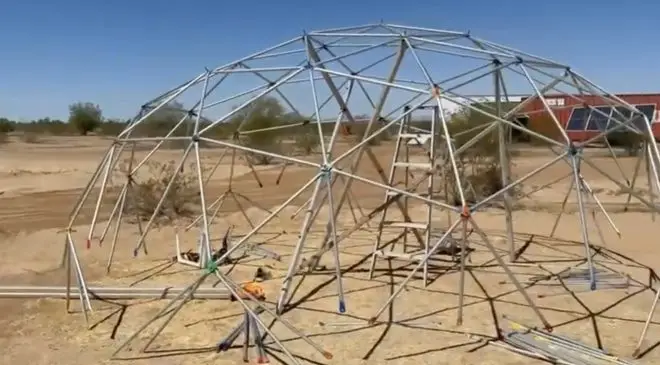
Welcome to Occupy the Land. This week we turn the
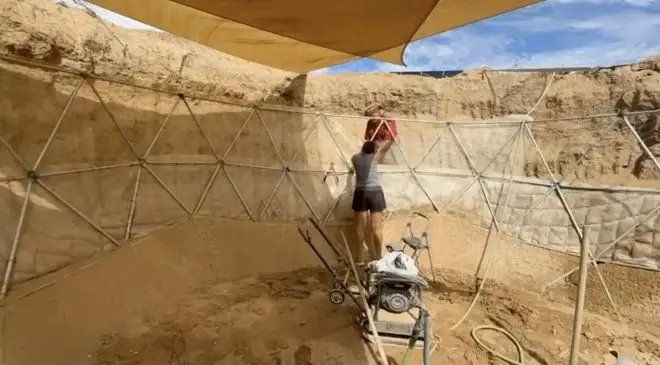
Welcome to Occupy the Land. This week we keep chipping