



Homestead Maintenance Day: Slime, Shredder & Sphere Floor
Welcome to Occupy the Land. This week we turn the
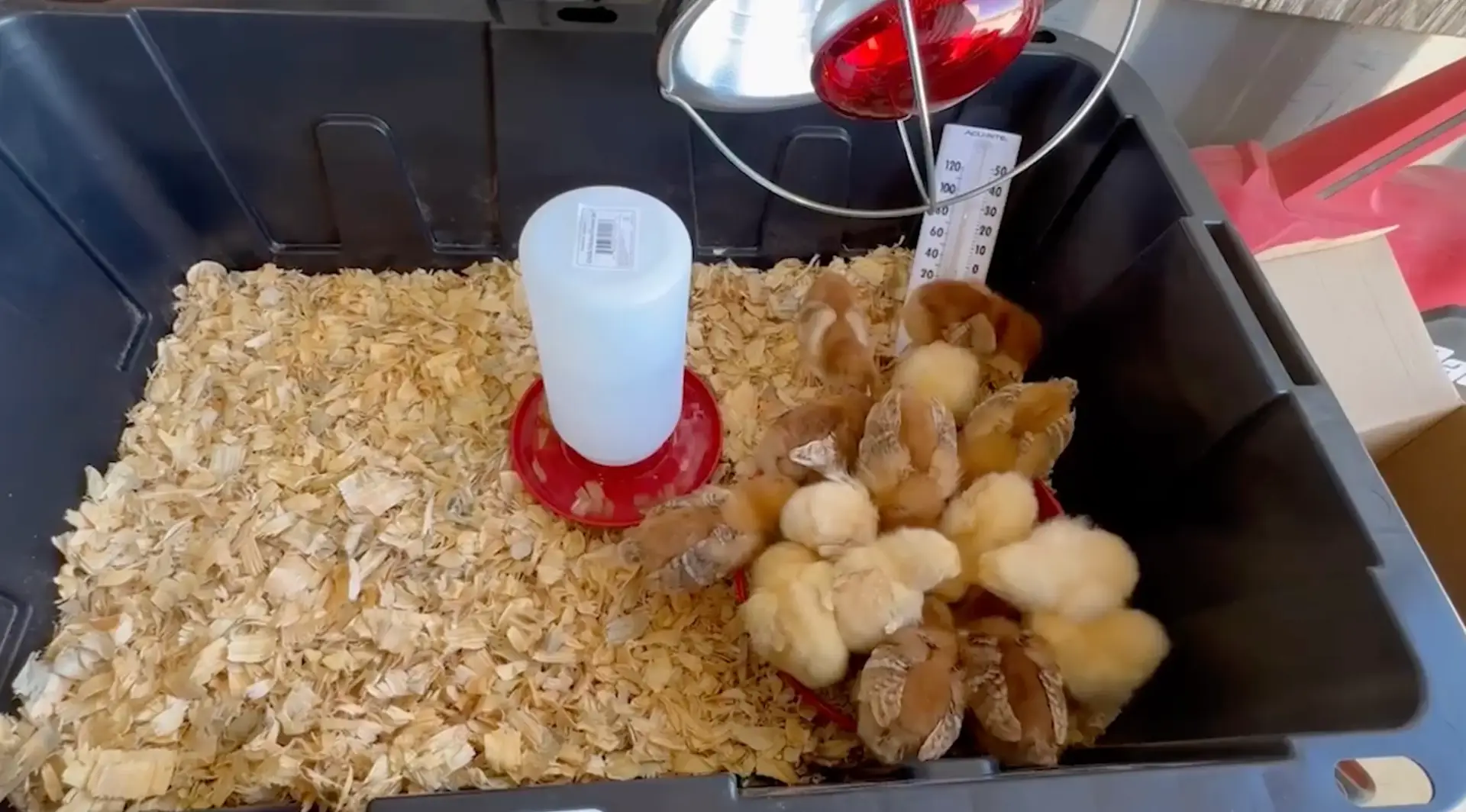
In this episode of Occupy the Land, we welcome 15 new chicks (Rhode Island Reds and others) to the desert homestead! Donna and Ernie set up the predator-proof chicken coop with hardware cloth trenching, a pony wall, swinging door, roosts, and shade/ventilation features while managing heat for the week-old birds. The chicks settle into a stock tank inside the enclosed run as they adjust to their new environment. We also touch on garden work and the importance of starting animal husbandry for food security. A practical, hands-on look at expanding self-sufficiency with poultry on the land! Peace.
Translate:
So I’m back on the land. I had to get a bunch of things to start housing chickens again. It’s been six years since I’ve had them, but I did get my chicks today. There’s 15 of them all together. 15? I’m sorry. Seven bucks orphans and eight Rhode Island Reds for about a week old. And when I the last time I purchased chicken, when I first started chickens, they were about $2 apiece.
That was in 2009. And then in 2019, the last time I got chickens, they were about 350 apiece for the bullet, and now they’re $8 apiece. That’s literally I called around and that was that was the going price. Now these guys I usually get them a day old, either a week old, the youngest I could find that we’re going to start.
These are egg layers. And this is important to get this started.
All right. So we got the chickens home. And at least they’ll be in here for the night until I get everything set up for tomorrow. But right now they need to be 90 degrees and just the ambient temperature orb. Enough without a heat lamp. But tonight we’ll have to turn this on to warn them up. We got to be when they’re first born.
These are about a week old. When they’re first born, they need to be about 95 degrees. Then you decrease the temperature five degrees every week, so won’t be too hard to keep them pretty warm. But they seem to be happy now. They’ve traveled quite a long way to get here, so they’re hungry and thirsty.
This is a stock shop where I used to get a lot of my feed and chick supplies, and we had our house before we went on to Love Bus Liberty Tour. So today I came back and I got a bunch of chicks.
So today I ended up going to a familiar place I used to go to, and we had our house stock truck. They have all kinds of feed and animal stuff. I haven’t been here in six years.
So we kept the chickens in the shipping container last night because you can shut it up and completely seal it off from any predators. And I want to take them over to the coop this morning. It’s enclosed, and I have a stock tank over there that I keep them in during the day so they can get used to their area and also just be outside.
It’ll be warm out today, so there’ll be plenty of warm. They have to be about 9085 to 90 degrees, but they’re all doing really well this morning.
All right. So I’ve got all the chicks in the coop now. It’s enclosed elevated in a stock tank. And it’s warm in here which is exactly what they need. So they’ll get used to this environment because this is where they eventually going to live. This seem happy. This is a very mild bunch of chickens of chicks. They’re very non skittish.
And they don’t try to run away when you pick them up.
So we’re at our neighbors getting all of his rabbit compost. And we’re bringing it over to the land and putting it in different places. Some of the areas we’ll be using it are in the potato area. We have to really build that up with some good soil, because the desert dirt, this clay is very alkaline and we need to acidified it.
So at least we’re going to bring in this rabbit compost.
So that’s what he’s doing. Now we’ve got about 5 or 6 loads.
And this stuff is ready to go.
So we’re going to have to really bring in a lot of this and then nix some sulfur in with it, because it’ll kind of tender the soil a little bit. So it’ll get it. We’re going to plant in the fall in this area. So we’ve got to spend some time now getting this prepped for that. And here’s some of the other areas that we put the compost.
This was the biochar pile that we did about a month ago a month or so ago. And so he dumped a load of compost over here to help fortify that as well. Okay. I think we’ll put a little bit in the compost pile over here just so we can have that composting with the other stuff. And do you want some over by your garden area or.
We’re going to keep doing it here in the orchard area or what. Go ahead and just we’re going to need a bunch over here. I don’t know how long this is going to be this whole row for the potatoes, but we’re going to need quite a bit of soil to build that up a little bit and turn it in.
And so, yeah, just turn it as much as you want. But I mean, that’s I mean that’s that’s a lot. Okay. They have so much bunny poop. I got at least 1 or 2 more. I think I’ll leave them some. There are some other neighbors that like to have I take it all. He’s like, whoa whoa whoa whoa.
So, well, I would do maybe a half a load here and then the other half. I don’t really need a lot over there. I just need enough to mix in with the peat moss that I got. Hey, where? Over there. By there. By the garden. Okay, I don’t know where. I mean, you caught. Well, when I come back, you go over there and you let me know where, and I’ll dump it there.
Well, Donna wants said she got her chickens. So now we want to set up and build out the hen house. So she brought it and got all the stuff out, and we’re starting to do the wall and just get her tools and everything all set up and table saw and the cut off saw here. And then here it goes.
So she has her chickens over here. She wanted a pony wall. Pony wall. That’s going to have hardware cloth. That’s going to be a door. And that’s going to be a swinging door that swings up. We had one on our chicken coop before and it worked out really well and they’re already starting to jump out. So we had to put like shelving up here you know.
So we’re we’re going as fast as we can. We got some of the nesting boxes and roosting stuff and everything you happy way it’s going. Oh yeah. I’m glad to finally get to this point and get them get them enclosed. Now that these guys are you’ve only had them a week and they’re already starting to jump and do all that stuff.
So twice is big already twice as big. And the goal is to get this all enclose the outer perimeter is enclosed. And I left them out here last night. Everything was good. But to get this enclosed event, we can start maybe in another week or so. Let them run on this floor and give them a lot more room, because what we found out is chickens are much healthier the more room they have to roam.
And I want them to get used to their environment. Now we have I ordered an exhaust fan for here because it is pretty warm. Fortunately, little chicks need to be warm anyway, so they’re not suffering too much. But as they get older, they’re like us. They’ll get hot in these temperatures and you’ll have to get that thing. So this is a mr. and we I ordered a battery powered pump so that we can continually just kind of do this in the heat of the day.
It’ll mist in here and keep it cool. And then the exhaust fan, I don’t know, we’ll put somewhere where they won’t get stuck in it. But yeah, we’re pretty much Ernie’s doing a good job. I’m just his assistant today. But this is kind of how we had the setup before. It’s a little smaller, but we really liked it.
It was efficient and it just did what we wanted to do. So yeah, I’m really happy about this. Yeah. What we had was for four by eight sheets of plywood. So it was eight feet wide and 16ft long. That’s what it was. And that worked out really well. It was two by six for construction and so on. But we had one of these swinging, you know, doors that had, you know, chicken wire on it and it came down and this shelf was really handy, you know.
So we want to do that again, because when you’re here working the opening pass through and I’ll have to go through the door all the time and stuff, and then we’re going to wood frame out the door. But we now, you know, we’re just piecing it together. It’s going to be sturdy. So we just got into it and showing you the end result because because we’re busy, you know, getting stuff done.
So you think we’ll we’ll finish it if not today within one more day or something. Because there’s a bunch of little you want a linseed oil, everything again. And then, you know, whatever we got to do, I’ve got a couple. I’ve got three of these door hinges. I don’t know if I have enough, or maybe we have different kinds that can do this part.
No, that’ll work for that. But only have three of these. So that might go for the door. So we have to frame out the door I got hinges over there. Put either chicken cloth or hardware cloth on these panels here. Hardware cloth I don’t know if we really need that chicken cloth. Probably be good. I’m sorry. Chicken wire?
Probably. So you got chicken wire and hardware cloth? They’re both a pain in the butt to deal with, but chicken wire will be fine for this. It’s just sort of a it’s a it’s a berry. I don’t think anything’s going to crawl through there. But in any case. Yeah, well, there’s really not a whole lot to do. But the things we do have to do.
Are going to take a little bit more precision to get them to fit. And then stapling on the hardware cloth of chicken wire and putting the hinges on, you know, they have you know, we have gaps at the bottom here. We may need to put some hardware cloth, cloth on there because we did want to have some airflow coming in.
But I know what’s going to happen. The chicken is going to get behind their probably will. But we have this hardware cloth goes down about a foot and then out and out of foot. So it goes down. Donna, Doug, this you may have saw the video where she did the front, but the whole thing have hardware cloth because desert foxes and whatever, you get wildlife here, you get wildlife here.
No tribe is kind of surprised. I didn’t see anything last night. I kind of I didn’t see any, like, footprints or anything like that or anybody tried to get in, but that is coming. Yeah. We’ll see. We’ll say find it once they find it. The chickens are kind of small and they’re not really making a lot of noise at night, but I mean, they can smell.
So I mean, yeah, I know you can smell the chickens. And they were like half that size just less than a week ago. Yeah. Their feathers starting to the the darker ones are starting to get their tails. The other the babies, the lighter ones have their wings. So there are about two and three weeks. The smaller ones are two weeks.
The the browner ones are about three weeks old. Well, we lost one because they that tipped over, they got wet. And you ever hear the term henpecked? Well if you show any weakness or you’re kind of sick, it’ll just peck on you. I’m not so sure that it pecked on it. It was just laying in the water, and I couldn’t because it looked literally like.
Like the wood shavings. I didn’t even hardly notice. Except I saw the eyeballs blinking and it was barely alive. So we actually got it. I got it, dried it off and got it kind of all back moving and everything, and I thought it was going to make it and put it under a heat lamp to warm it up and, and gave it some love and then left it alone for a couple of hours.
When I came back, it was gone. So but, you know, you lose. That’s one of the things I’ve lost many chickens over the years. I’ve lost babies. I remember there was one year this was along probably about eight years ago, that I got 24. I would get like every January. I would just get a bunch of chickens and kind of incorporate them into my floor.
Yeah, because we were feeding the coyotes. Yeah, we always lose them throughout the year and always just want to replenish the egg layers. The one year I think I lost about 21, 20 of them overnight when they were babies. So I’m not really sure what happened there, but they got to call too hot. I don’t really know. But so yeah, you just have to, you know, manage the heat at least the first few weeks that manage to heat, they have to be warmer.
It gets down to 60 something at night and you have to keep them at 90 degrees. So that’s why we have, you know, this the monitor and Donna was freaking out. If they well, it’s not under 9095 degrees for the first week, 90 for the second 85. You lower it five degrees until it’s about 80 degrees. But yeah, they don’t have the ability without their feathers.
They don’t have the ability to keep themselves warm. It’s just this little, you know, peach fuzz look and stuff that that’s not enough to keep them warm. So you basically have to warm it. It’s like a little baby, you know, you have their panting. They’re hot. Yeah, they are hot. So I spray water on a male much like it, but it’ll cool it down in there.
So they’re going to have to get used to this because we’re going to have Mrs.. They they don’t like it much I like it. All right. Well, we’re going to try and finish this as much as we can today. We’re on it. Well, we get organized, but I’m always needing to come get a tool and back and forth.
So I like this electric bike. This thing works great. And I put the basket on because I was always trying to carry under my armpits, you know, a bunch of tools and everything. So put that on and you can get bigger ones and have one on the front and make it a cargo bike with saddle bags and all kinds of crap.
But this is all I really need. I need to go get, you know, a jigsaw off around in the corners and the sander, you know, a little grind sander for whatever. So this thing works great. I just zip over here. Donna went to get some more water, and then I go back over there. Boom. Fishing use of our time.
Okay, well, we got the hardware cloth coded door, you know, so we had a door. We’re going to put hardware cloth here. And then this is going to be a swinging door that’ll swing from the top out and make use of this shelf and so on. So yeah, it works good. You know, that’s and clean opening. Make it work good.
And the babies and all they do is eat. They just eat and eat and eat and come times drink. And then they switch places and come back over here and eat and drink. I mean, it’s amazing. And then we got once we get this all sealed up and everything, you know, we’re going to go ahead and start building on this plywood and the two by three and two by four construction.
And we’re just trying to size some boards that will go here. And I’d like to do it two by threes because it’s lighter and way stronger than we need. But if we just got two by fours are long enough we might wind up doing that. Did you find any over there? No. There’s a bunch of two by fours.
That’s it. So what do you think? Should we cut the two by fours down to two by threes or just two? Two by fours on that frame or what? I’m down to two by three. It’ll be a lot lighter. Now we have two by four across the top. But yeah I think we’ll do two by threes because I like doing two by threes a little stuff like this.
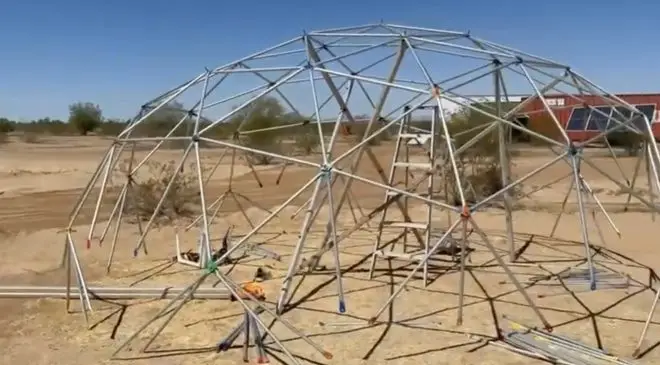
It’s just not as heavy. Well we’ll get more done today piece okay. We need to sift down with expanded metal there. You know this is from the Sam pond. You know you just screen it out. We wanted to get this finer gravel here to do this, to make that these are the supports for the dome, the sphere or the root cellar.
And those straws, when those are turned upside down, that’ll have a hole in it that the bolts go in and support it to give us room, to be able to put the owl feet down. So she needs to make a little bit more to do these three. And then we need those to set for at least a week.
Full strength is like a month, but we’ll start using it after a week or two. And I’m over there finishing up the struts and so on. So we got to do everything and it’s time. So Donna’s a concrete woman, right?
https://www.bitchute.com/video/PBKiRAwOIgIP
Chicks Arrive: Setting Up the New Chicken Coop in the Deserthttps://t.co/z8rMyXP29i pic.twitter.com/x7bUKE5QqK
— occupytheland (@occupy_the_land) June 6, 2026
Welcome to Occupy the Land. This week we turn the
Welcome to Occupy the Land. This week we keep chipping
Welcome to Occupy the Land. This week we’re focused on