



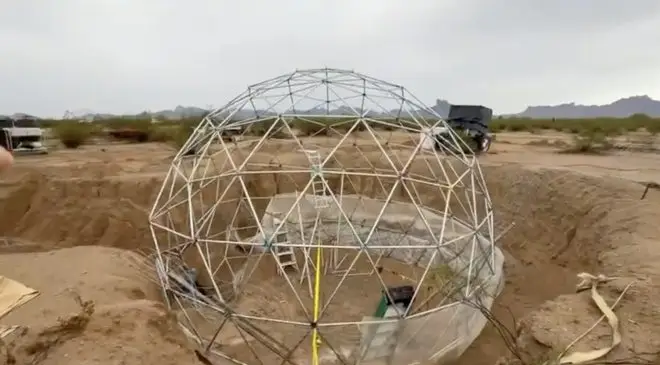
Tractor Lift Day: Completing the 20ft Sphere
Welcome to Occupy the Land. We finish the top half
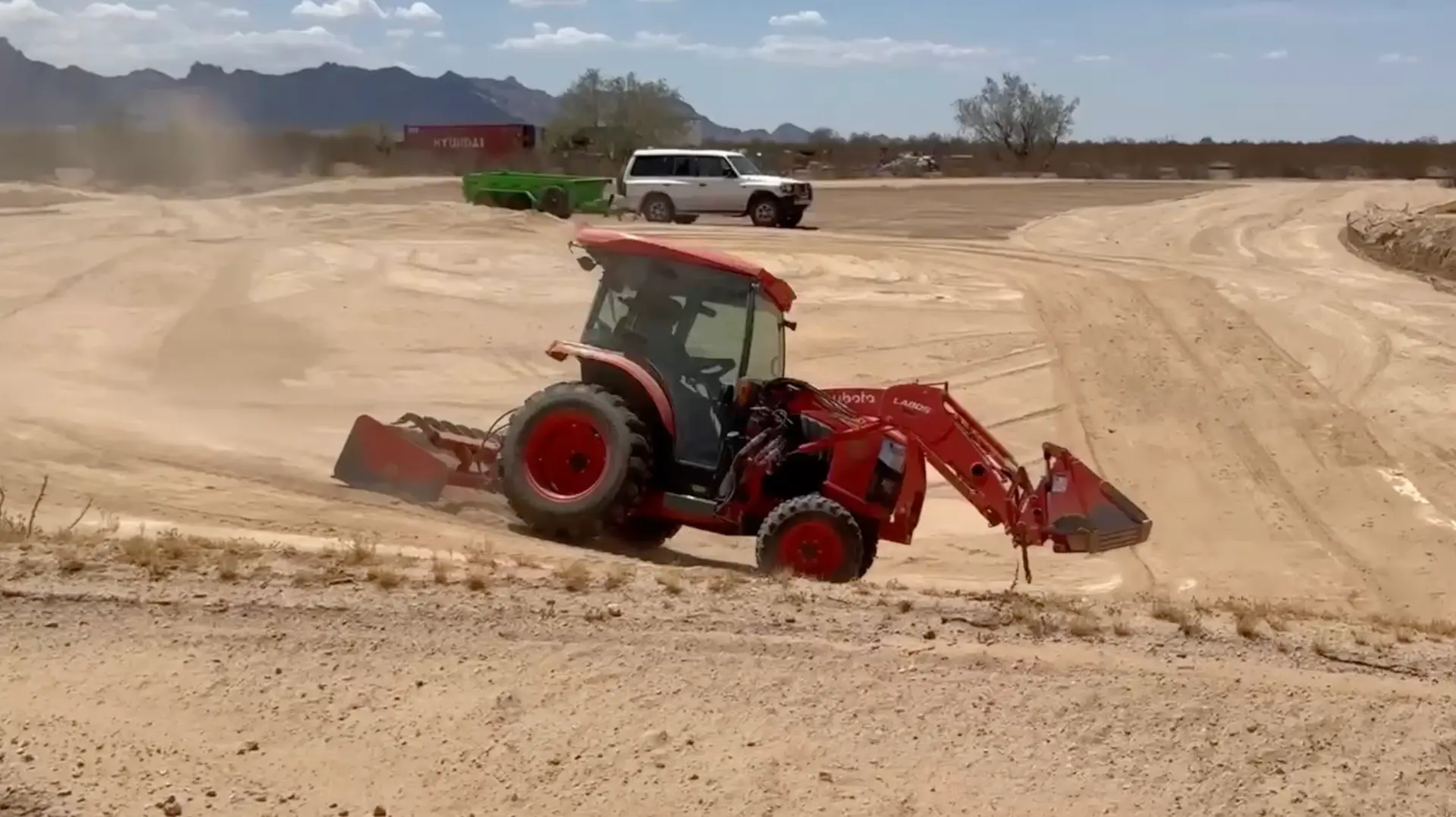
In this episode of Occupy the Land, Ernie expands the sand pond — an acre-scale water storage area holding roughly 326,000 gallons in the lower section alone. He digs deeper into the moisture-holding caliche layer (still damp after 10 months), explaining how this calcium-rich soil reconstitutes into concrete-hard material when wet and becomes ideal for root-cellar mud and dikes. The excavated dirt builds berms, check dams, and orchard trenches while preparing for a pond liner, perforated collection tank, gravel/hardware-cloth filtration, and a secondary 6,500-gallon settling tank. Up-slope dikes will saturate the future orchard with monsoon runoff for mesquite, ironwood, and palo verde plantings in Zuni bowls. Family time includes grandkids learning the tractor and trying to catch chickens. Practical desert water retention and food-security progress in the July heat! Peace.
For sending donations of materials or otherwise: PO Box 1232, Tonopah, AZ 85354 USA.
Transcript:
Now, what I wanted to demonstrate to you is an acre of the sand pond that we’re creating here. This lower part, and acre is 326,000 gallons. Every pass that I go and I get this, I get it down, you know, an inch or so, and then I pile it up here we take and put it in the dump trailer, and then we build the the check dams and the dikes and, you know, backfill the root cellar and build this berm here.
And do I mean, we need the dirt, but I don’t need a here because this is where we’re going to have it all drain for our water system. Now, if you turn around here, you’ll see one of the main washes that come in here. I’m going to build this down. It’s a ramp. It’ll will have a pond liner that will be lined with gravel and whatever kind of clean it as it goes down.
So we have a lower area over there so that it’ll settle. All the sediment will start to come out. And then as it comes up, it’ll go through kind of a filtration system here as it goes down there. Now down there is where the water tank is going to go and it’s going to be perforated. And then we’ll put, you know, a ground cloth around it and then hardware cloth, you know, and activated charcoal and then we’ll have gravel and so on.
So it kind of filtered as it goes in. But that’s not really going to be the the settling one. It would be pumped out from there onto another concave, rounded bottom, 6500 gallon tank that we have over there, that whatever sediment is left will settle down. Then we’ll just back, flush it out, and we’ll pull it from a higher level.
So we’ll have pretty good water, certainly for animal husbandry and planning and growing and whatever. And the orchard up here will fill up. But this is the point that I wanted to show you the reason we can use this soil for what we’re doing on the root cellar and so on, is because when you get down here.
You can see that this soil is a lot of sand and gravel. So we just do the trauma. My grandson and I were starting to make the the trommel as the barrels that we can do for rotating or whatever, even this powdery stuff up here.
Lots of sand and gravel. So if we separate that out, then we use that for building and do whatever heck we want. Now down here you can still, you know, still got moisture in it from ten months ago. This is the.
This is like concrete.
So when we get down to this all this loose stuff is that so once you wet it. And we do like the mud that you saw us doing that little triangle on the root cellar. Well, it’ll reconstitute into this stuff. This is hard.
You had a little bit of Portland in that and you’re done. So that was why we needed to take it from down here. That’s still kind of topsoil about that level. When you get to about the road level and you get down here, this is when you get into that heavy calcium and it solidifies into a really hard soil.
So anybody that lives in the Sonoran Desert, you’ve done any gardening or digging, you hit and you’re like, oh no. But if you hit it with water and let it soak in for a little while, you know, then you can kind of dig it. So when after it rains and so on and it gets wet here, you let it go for a week or two.
Then you take the tractor, you can just shovel it up and it works fine. But if you keep it dry, you know, and you don’t have, you know, a bunch of rain going in and you drain it away. And so it just stays hard. And it stayed that way for millennia, you know, on the ground. So that’s what this is.
This is what I’m trying to do. I want to get down to this stuff and be able to scrape this stuff off, because you can see that’s heavy calcium. That’s what makes it so hard. When we take this, every if I do that much and around, that’s 36,000 gallons every inch and a quarter is about 36,000 gallons that I get just from pulling this out.
So we put the pond liner in. When do I do it? Do I do it now? Do I wait a little while to scrape it a little bit more and get another 40,000 gallons? So what we did is we make it to where we can roll back the pond liner for next season and just keep, you know, going back with it.
So as you look, stand here and you look at the mountain peak up there and then just back up all the way up there and you can see this is a lot deeper than you think. We are down probably like 12, 15ft or something. It’s, you know, now the tank is only about nine feet tall, you know, ten feet.
So we’re going to see how high we put it in. So that’s what we’re doing is we’re multitasking. We’re taking the soil at of here so we can have storage. We trommel and separate the soil. So we got gravel and sand that we put around that tank and on the pond liner so that you don’t have evaporation. You don’t even see the water.
And it helps clean it and all that other stuff. But it is a sample pond. It’s a man made aquifer. So it also keeps it from getting dirty, keeps it from evaporating. And you have your own storage and it’s a lot of water. It’s hundreds of thousands of gallons. So I’m just saying now on the walk up this way, up in the top part where we have this dike.
Separate the work from the water storage down here. So as I pull this soil, a lot of this I just take and keep building this up.
So this separates the water storage from the orchard part. Now I need it to rain. Really good. It’s probably going to do it while we’re gone. And it will charge these ditches. So you’ll have a million gallons or something. That’ll be in. I mean, it’s going to be ridiculous because normally what happens when it rains, it does this.
It just wets the top part here. And then it sheds off into the washes so it doesn’t go that deep. It just kind of does a little bit of that. Then it goes off into the washes and off the land. So if we can back it up and hold it, it will, that will be, you know, feet thick.
Now it goes. If you have standing water, it travels about 12in in 24 hours. So that means that if I can saturate this and get this a little lake, this will be in about now a week. All of these will be connected in all moist, and hundreds of thousands of millions of gallons will be here for the orchard.
So I need this to flood, but I needed to get it ready. So then we will put all the brush in here from around the property. Then we’ll burn it. Then we’ll just push the dirt back over it, flatten it, amend it with some sulfur. We gotta, you know, lower the. And we’ll get really productive here and there.
Just close enough. As the trees mature, they’ll start to touch each other and, you know, carve the little tunnels in it and have some shade and it’ll be cool. And the animals. So that’s what this is for. But we needed to have this separate as all this water comes in off these mountains and these washes. Here goes here first, then it goes over there and it’ll flow in to this, and this will be the storage, but there’s no sense in storing it just so I have to pump it back up here.
I just want it to be here and saturate that. Then we’ll go to storage. So that’s what we’re working on. So it’s not just one thing. There’s a bunch of stuff that we’re doing at the same time that we’re using this hole for certain things, and then building up dikes around to flood our property on the other side of the road where the House bill does that open spot over there, then Donna’s garden area and the chicken coop and the root cellar, all that property on that side were flooding with check dams.
Now we do augers that we put holes in and penetrate, so it’ll soak in doing the same thing that we’re doing these trenches. But up there we’re going to use indigenous trees. There’s going to be mesquite beans, make flour. I mean that’s how the natives lived was on mesquite beans. Well, and the cows out here. So we can plant a bunch of mesquite, ironwood, palo verde.
I really like some palo verde. And so we’ll get indigenous plants. I’ll be back there and it’ll have areas called Zuni bowls. And here look down here like you have a wash goes here. And we take the tractor with that back blade. And I just make a circle like this. And you got this rim here. Then we auger a hole in there.
And then when this floods, that is where we’ll put a tree. And then we have another wash and we’ll put a tree there and then, you know, so we’ll have a bunch of indigenous trees out there and it’ll be nice. And this will start turning green and it’ll be a few years. But I know what happens when you, you know, back it up and you control the water.
So we’re not really stealing any water or anything. We’re just slowing it down and holding it. Now where it goes off, once this stuff fills up. That pole is the north east corner of the property, and that is where the overflow and it hits that wash on the other side of that and just continues on down to the river.
You see the kind of green plant at the bottom of the valley back there. That is where the main river flow is, and they call it Centennial Wash, I think. So it’s it’s kind of a river. And so that’s the plan. So we scrape the dirt, we keep going down, down, down, down, down, scrape off the hard so that we still have a hard base.
Put a pond liner on it, use this powder, which is, you know, scrape. And we put it in the trailer dump trailer that hydraulics up, and then we dump it the create like this, you know, these dikes all around the property control the water. So that’s what’s going on. And, you know, look at the prototype build over there, you know, why aren’t you working on that?
Well, we’re at a stage that we could really start having the fun now, and I’m looking forward to doing that. When it gets cooler, it’ll be a lot better. But we realize that it’s a food thing. There’s stuff going on we need to get the garden. Don’t need to get the chickens done. We need to be able to put food where we got it, that we just got out of storage, a bunch of totes, you know, I don’t know, it was like six, eight of them.
I mean, that’s a bunch that we have of, you know, flour and beans and rice, you know, just a bunch of staple crop, you know, things that we have for food storage. But where do you put it, you know, in 140 degree shipping container. I mean, you know, we need the root cellar. So that’s why we started working on that.
But we still have maintenance on everything, you know, all of our work that we need to do. But between Donna and I were able to put probably about, you know, about 30, 40 hours a week into the property of, you know, people hours. But that’s I mean, it’s a lot the work. So we had family obligations. We had grandkids out a couple of sets, you know, doing.
But they got to learn some stuff and help and do and be part of and learn something. So that’s where we’re at now. We’re going to be it’s now the middle of summer. It is the middle of the was it July 21st, something like that. And now is my god time. Now we just started getting clouds. Oh my goodness there’s a cloud.
So when we get some clouds the monsoon we’ve had a couple of rain events but we just you know just a little bit of rain. It didn’t even flow. It was so dry. It sucked it up and it was no river, no sheeting. No. And it was a downpour. But this ground just sucked it up. So I’m like, okay, I guess it was dry.
Take it. Go that way. This way.
No. You want to tilt the bucket up like that? Yeah. That’s.
There you go. Okay, now go over there. Really slow.
Lift it up.
Go forward a little more.
Okay, now lift up the bucket.
Push it to the right.
Okay, now back up.
Bitchute link: https://www.bitchute.com/video/0AAEQYWwqj6p
Building a Man-Made Aquifer: Sand Pond, Dikes & Caliche Soil https://t.co/dUaaYkeBkE
— occupytheland (@occupy_the_land) August 1, 2026
Welcome to Occupy the Land. We finish the top half
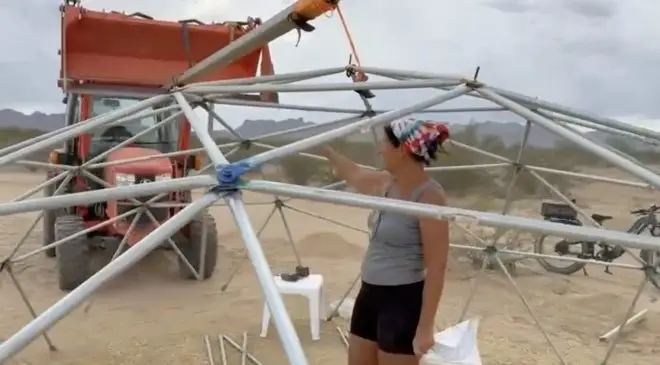
Welcome to Occupy the Land. Donna and I assemble the
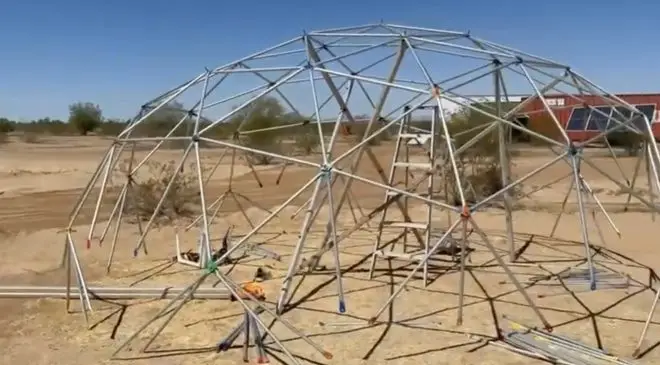
Welcome to Occupy the Land. This week we turn the