


Root Cellar Progress: Fence, Backfill & Hurricane Prep
Welcome to Occupy the Land. We tighten all the bolts
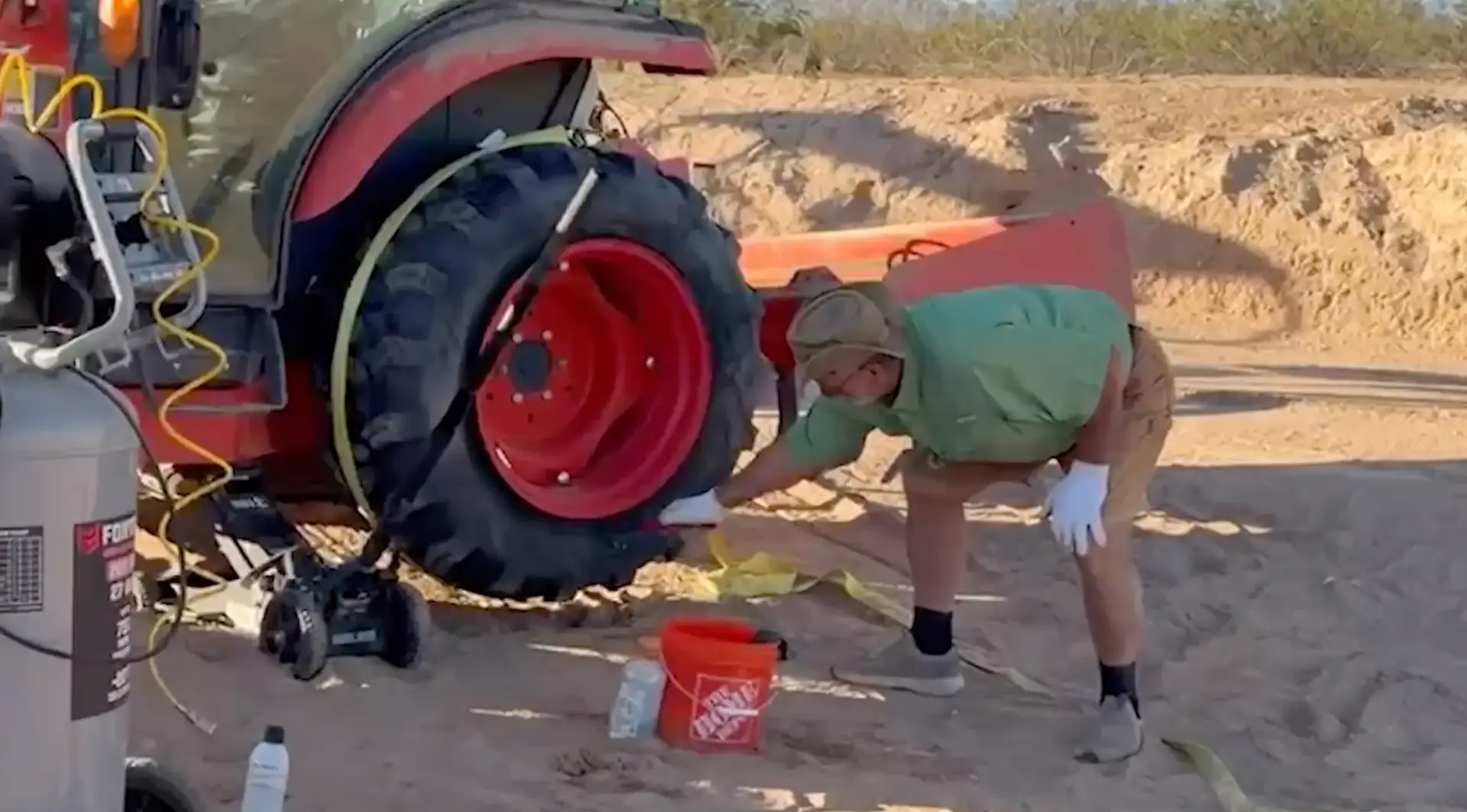
Welcome to Occupy the Land. Donna hills the potato plants so they don’t green up in the sun, then we show the new Christmas-tree fittings on the thousand-gallon tank (garden hose, 2-inch, and 3-inch outlets). We pick up a heavy-duty 80×30 pond liner from friends in Pine, Arizona, and order a larger one. While shaping the sand pond the tractor tire comes off the bead; Ernie jacks it up, uses a ratchet strap and starter fluid to reseat it with a quick boom, then airs it back up with the portable compressor. We also decide the vertical tank will sit in line with the buildings so we keep the mountain views. Peace.
Transcript:
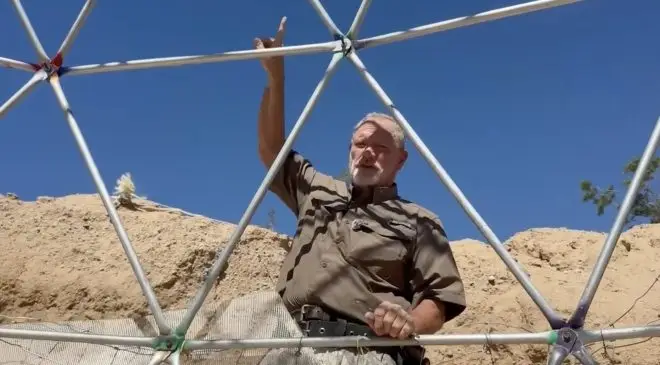
All right, so Ernie is on top of the dome. I’m on the side of it. Top of the world here. And and, doing some sketch stuff.
So I wanted to give you an update on the potato plants there. This one grow bed is growing really well, and the plants are growing really good. So what we need to do now is what’s called hilling. So what you want to do is you want to take some of this dirt that is around the plant, or you can even bring in more dirt or soil or however you want to do it, and you just throw it on the rootstock there and kind of hill it up a little bit around there.
I don’t know if you can see that very well because it’s sunny, but you kind of cover that a little bit because the the potatoes are going to kind of they’re going to grow up and they’re going to, they’re going to grow down into the dirt. So you do not want them to have the sun on them because it creates this chemical called solani, which creates green potatoes, which can be toxic and cause all kinds of problems.
Anyway, so we’re going to kill these up. I’m going to put some straw on them as well to cover them, water them, and then just let them go for a while and we’ll see what happens.
Potato plant that I filled up already. Protect them from the sun and also help keep them. You don’t want them wet that you you know, because they’ll the root crops, they’ll get kind of mushy and everything. But you do want them to stay damage. So this will help.
I don’t know what the. So pretty good. Get it? Pretty damp, but not soaking wet. But I don’t water these every day. Maybe here in Arizona and in the fall, maybe about twice a week. Then let them dry out a little bit.
Welcome to occupy the land. Occupy the land. Well, that means a whole bunch of stuff. There is always maintenance or repairs or something we need to do. Now we’ll go show you on Donna’s thousand gallon water tank. We needed to have it to where? It could have a garden hose that came out a two inch line with a coupling and a three inch line.
Well, that’s like a Christmas tree of stuff. And we’ll go show you what we had to do there. But it’s going to be a lot more convenient. We put a little investment in it now because the big water tank uses three inch, and then there’s two inch where we get the water. And then of course, you won’t be able to have a garden hose and kind of go around doing different things.
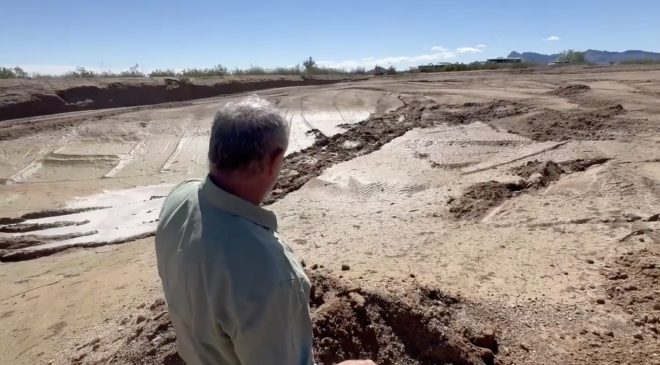
So we’ll show you that. Now, while I was doing, there’s supposed to be another big rain coming up within the next week. So we wanted before we had some of the guys over and everything. I wanted to go ahead and clean up the sand pond and get it to where we can start putting the pond liner on, and I’ll show you that in the back of Donna’s truck we went up to pine, Arizona, which is up in the pot.
Matter of fact, the town’s name pine and strawberry and Payson up in northeastern right at the base. What’s called the Mongo rim. That goes up to like 8000ft of plateau up there. And right at the base of that, it’s about 5000ft up. So that’s like Denver, you know. Well here in Arizona, they get snow up there and so on.
We have friends that have a really nice cabin set up there for their family. And they had a pond and for years they’ve had an 80 by 30, 40 mill, which might as well be an inner tube. I mean, it’s really heavy duty, but they weren’t using it and they knew we could use it. Said said, you come get it, you know, stay the night and we’ll hang and you can take it.
And I said, deal. Nice people. Been friends for decades. So we got that. So I ordered another 240 by 40. Kind of do what I really wanted. And I need to get this prep now. What happens sometimes? I’ve done this a couple of times before because it happens. But this here as I’m going around and dressing this, this is the soil that I need to get out of here.
But I keep making more and, we put it around the land. We need it for the backfill on the root cellar and so on. But when the tire on the tractor, especially if it’s low, it all or anything like that, and you do this, the tire will come off the bead and poof, it goes down. And that’s what happened over here.
So what I’m going to show you is how the heck I don’t have I can get that inflated tubeless tire and not have to take it off and take it in and it be a all day thing. So what we’re going to do is I’m going to show you how we do this. So we jack it up, make sure we clean it.
You know, I think like a sad thing, I make sure there’s no birds and so on around here. And then we do soapy water and get it up there. Because what I’m going to do is I’m going to spray starter fluid in there, take a lighter over here and go boom. And it’ll go. And then we can air it up.
And we got our portable battery brought out the compressor. It’s on wheels. So anywhere on the land that this happened, we could do it. I mean, it takes like an hour jerking around, but at least you can do it, you know? And, I’ve done this a couple of times. I think I’ve showed you guys before year or two ago.
But this is a good lesson. The one thing I did forget is we need a ratchet strap that goes around this. So we take. And you put a ratchet strap around it, and you kind of sense it so that it presses out and gets on the bead here. Go ahead and do a close up here. So it’s a tubeless and it goes on.
When you put this you spray, you kind of open this up and you spray the starting fluid in there. When you hit it, the ether in there, it goes expands really fast. Go boom. Now it only needs like 20 pounds of pressure and now put like ten in it. I mean, you can drive it over to, you know, air it up and so on.
But we’re going to do it here. So I’m going to go ahead. We’re going to run, get a ratchet strap. Put it around here. Now we’ve had big ratchet straps and it just blow the hooks off. I mean it’s you need to put ratchet strap on there not only to press it out, but so you don’t die from shrapnel or something.
But, we’ll go ahead and do that since it down. Get it, you know, spray it in there, get it kind of, you know, positioned and then boom, it’ll go air it up and we’re done. So I’m going to go ahead and show you that we’ll be right back. But what we’re going to do is we’re going to go over there, get a ratchet strap, and we’ll show you the water tank for what we did to get more attachments on it.
We’ll be right back.
Okay. Now these are the different lines that you can use for various different, you know how much volume you’re doing in water now, this gallon tank, will fill up at the pumping station and we do the agricultural. Well, now, how long does it take to fill this up? Eight minutes. You know, eight minutes. And it goes fast.
And that’s where the two inch line, three inch line probably go even faster. So this originally had a three inch line on it, but we generally do two inch. So what we did.
As we put this Christmas tree in. So we have a garden hose that can go here and it’s empty now we’ve emptied it to do this. But we have a garden hose valve. We have the two inch valve. So you just take this off and that goes over there and boom, it’ll be a going fast. So you do two inch on off, then the three inch on big valve off.
And that goes here. So this is gives us a lot of options on the water and our pump for this. And if you you’ll need a big pump. We have a big gas powered pump that came with it and it’s three inch. So we needed this, you know, for a lot of things. And then we can also connect a sprinkler rack here for wetting the roads and so on.
We’ll fashion that later and we’ll show you that project. But but then I needed to reinforce that unit strut that kind of holds this so it doesn’t mess up. The junction here on the tank. But what we needed to have as we extended this so that two inch square aluminum, we had just under six and that just I didn’t even have to bolt it.
That thing is in there. We hammered it in. It ain’t going anywhere. So this is makes it a lot more convenient for Donna. You know this this is nice. So we got this taken care of now over here.
Donna’s cap, off so that we could get this pallet. And this is the 80 by 30 pond liner. So we’re going to take the tractor out of here directly next day or two. Put the forklift on. Go up here. Now, fortunately, this comes out you know this is on a slide. And we can just slide it out so that the forklift can get it.
So like that. So we’ll go ahead and get this and just take this off and set it over there by the pond. So we got some other men out here. We can start to fold it out. Maybe, you know, we’ll have the other 240 by 40 that will be here, within the next week or so. So it depends.
When I get that done, I, I’m near done with how I want to craft it through the first round of, the water capture. And if we did it now, we’d get a bunch of water that be a common. But then I’ll do it right. You know, we’re going to take our time because every trailer load of soil that I take out, which I need a bunch of it around and building different stuff, it that much more water that we can store.
Now we have this water tank over here goes up. Let’s walk over there. This water tank goes up vertically and it has a stand. So what we’ve done we just got yesterday our what they call them sauna tubes and they’re 12 inch and it takes six I think. Yeah it’s six on the stand. So we’ll it’ll be around here somewhere.
Donna hadn’t she got to tell me where she wants it. But, we’ll move this around. I’m putting more soil here and bringing this up, leveling it out. Because the valve that comes off the bottom of this thing.
I think it’s inside. But the, the valve that comes off of this goes off of the bottom, and we can have it settled. We can show how it what’s concave? It’s like this. So when you open that valve, all the sediment and so on. That’s good. The. Yeah. You go the sun, you will build.
Oh. Did you go inside and went inside but you went inside this I didn’t get entertainment. It takes two people really to. Yeah. So you got the inside. So you take this off. We’re going to get a new one of these because you know it needs to be replaced. So we so we go ahead and take this off.
You don’t have a mic on baby. So we take this off and it’ll come down and out underneath this. And we have a valve that we can open and flush out. Whatever sediment goes to the bottom of this that comes out of the sand pond. So one of the main things that we got to do is decide where this is going to go.
Now we have it roped to this high winds. This will be a mile down the desert. I mean, you know, we have one of our friends did he had he had to, you know, get in it and start walking it and bring it back. But the, I’m one of his. So we’re going to level this out, bring this up like we did over here.
And when we finally get it to where we know we want it because we want it in line with these, take a look that way, in line with these buildings. You know, the 30ft dome over there. That was the old workshop. Then we have this dome, and then it goes in line with the shipping container workshop. And if you have just this, we only lose maybe ten, 15 degrees of view, which that’s not.
There’s no mountains behind that anyway. So that’s kind of where the freeway goes over towards California. So we’re cutting out our view this way and put everything in line with that. So we’re not missing a lot of our mountain in vista views. So that’s where we’re probably going to be putting it right around here somewhere. Now once we get that over we mark where we’re going to put it.
Then we’re going to put 12 inch, two foot deep concrete pylons and then that will bolt onto that. And then we got to muscle that up. That’s going to be a thing. So we get that on there. And this will be our primary water tank. And it’s going to be higher than anywhere. It could just drain wherever we want it to go.
So we’ll be doing that here in the next week or two or month or whatever. I mean, I’m not a timeline. I just progress every day, every day, every day stuff gets in the way. So the water tank will be done. We’re going to be finishing up the next step on the root cellar. We have a lot of elevation stuff to do.
We have pond liners to do, and then there’s maintenance on everything, like fixing tractor tires and stuff, and then, and then doing stuff on Donna’s water tank to make it more versatile. So that’s what’s taking our time. We’ll get ratchet strap, get back over there on that tire, and that’ll be entertainment.
See, I knew I’d do that. Oh, I got it out. Okay, cool.
All. All right. Come here.
Yeah. No, it goes boom! And now it’s on. So just release the ratchet strap. We have to get a big ratchet strap because you get the smaller ones and it just destroys them. They just pop off. This one’s really tight.
Come on and just take it off.
Let’s see how aired up it is and just let it down. There it up. Enough.
This is on on the bead. So.
Where’s the, filler?
All right. We had to take in, plug in the battery, charge up the compressor. Had some antibiotics on to make sure, but, and move it a little bit so I can get to the valve stem here, and then you can see it’s just starting. They’re up.
And this has had a slow leak. I’ve had to probably what it was. We were gone all weekend. I didn’t check the tire pressure, but, I have to air it up about every week or so. I’ll do it. And that’s one reason why I was looking forward, not forward, but took advantage of doing this again so that I could clean the rim and put that seal on it, because that’s where I think it was leaking.
You know, last time we didn’t weren’t in a position that we could seal it very well. So this is.
A little bit more. And so it’s not a long repair. It’s not that big a deal. But you know, the first time this happened, I was helping a neighbor put in their septic tank and it was rubbing on the side. And then when I do the root cellar, you know, if you don’t have it full up and it breaks that bead by the tire rubbing against something, boom, it loses pressure and then it’s a pain.
But but this method I saw on the internet one time a long time ago, something how they put on truck tires and this is how they do it. If I was to take it into the dealership, that’s what they do. They just, you know, and then they charge you because. So you know I can do that. So worked out.
Well, let me see if I got pressure boom at 2022 in it. So we’ll go ahead and get this done. And then we’re done. We’re back to business. That’s how it’s done. Well it wasn’t too much entertainment for you because it just worked. So that’s cool. Pace well Tim Patrol came by and brought his monster truck, you know, down the sand pond.
And Casey, friend of his, helping him work on it and done it. And this is awesome. He’s going to, exit and build in Austin, Texas and got all his goodies in there. And he can just camp in here, and this thing will go everywhere. And it’s very, very manly. So this is.
This is awesome. 524 pounds a piece, etc.. And he knows this for a fact.
Odysee Link: https://odysee.com/nov-6-draft:1573ca8807b5ed892885274e83e3d26106c4676a?r=7k1o9GfJtngPSsbXu4ZweYPsakJod4Gm
Bitchute link: https://www.bitchute.com/video/1uPMaHM98ffX
Potato Hilling + How We Reseat a Tubeless Tractor Tirehttps://t.co/NxB3DiAjJy
— occupytheland (@occupy_the_land) November 7, 2026
Welcome to Occupy the Land. We tighten all the bolts
Description: Transcript: Saw these two birds perching on top of
Welcome to Occupy the Land. We extend the dike on