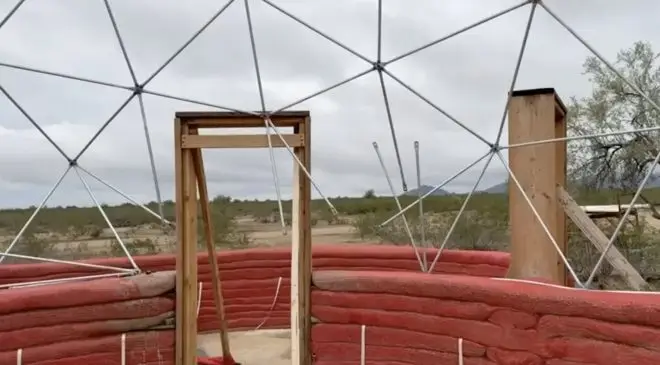
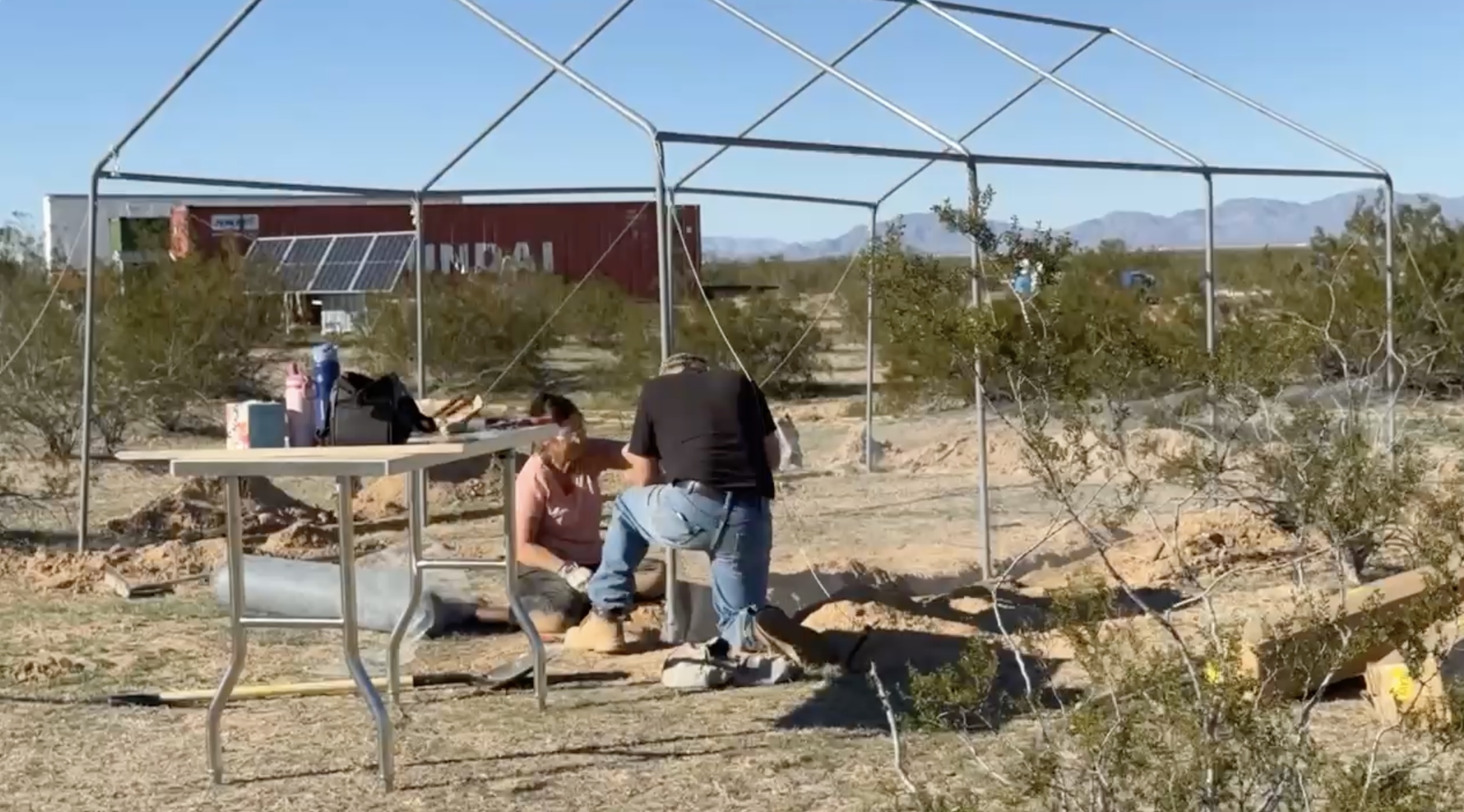
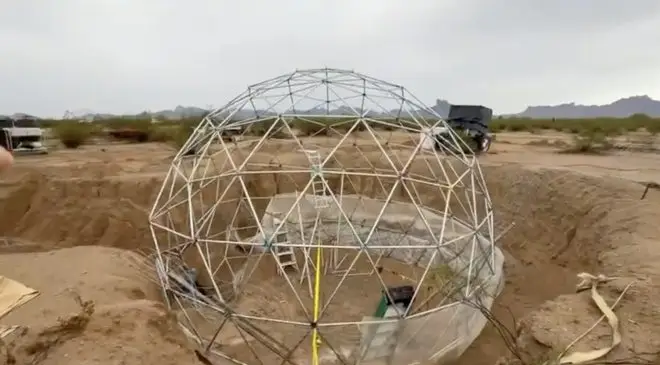
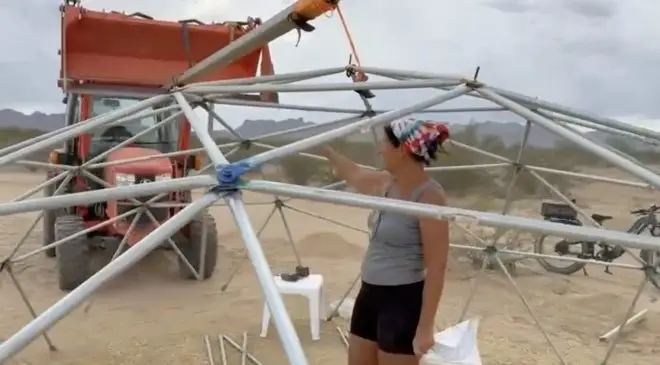
In this episode of Occupy the Land, we push forward on two key homestead projects in the mild Arizona winter weather. Ernie completes the mobile battery shed behind the shipping-container workshop, leveling the pallet platform, adding a wooden floor, and installing the full 15kW 48V battery/inverter system to deliver reliable 120/240V power for welders, plasma cutters, and future dome strut production. Meanwhile, Donna trenches a foot-deep perimeter around the repurposed 12×20 canopy frame, burying quarter-inch hardware cloth to create a predator-proof chicken coop near the garden—ready for chickens soon. With family holiday cleanup done and cooler mornings in the 50s, we prep for livestock, food production, and more builds, blending power independence with practical animal protection in our growing desert oasis! Peace.
Transcript:
We can have it at the homestead. Getting ready for another day. The best thing about the mornings is coffee and the percolator there. Bernie and I have gone through different variations of making coffee, because things today don’t seem to taste as good as they used to. So anyway, we’re kind of still working on that early. Aren’t you still sleeping?
It’s really quiet, though. Get a lot of work done.
This is our little Mr. Buddy Heater. It’s about 52 degrees in here, and this will raise it about ten degrees and about half an hour. It keeps it nice and cozy in here. So it’s 52 degrees inside, 40 hours and just getting ready for the day.
So yesterday we put in the quarter inch hardware cloth over the chicken coop just around the sides. And today we’re going to put the chicken wire on top and close it. And then we’ll work on getting the door put in on the side.
Okay. Well, Donna got her chicken coop all put in her. Brian, a friend of ours came and helped her and got it all secure. Just needed to do a door. And I love this square tubing. One of these years, we’re going to run out of this stuff over all through the day. But, yeah, these self tapping screws just go in these hinges.
Boom. Done. So we’ll get our clock on this and, you know, hopefully get an Allen Hawk proof.
And I can tell you.
I’m finishing up with the chicken coop today. The very last thing I had to do was dig this trench. It’s about a foot deep and a foot wide. Attach the hardware cloth to the bottom of it. Bend it out, cover it with their. Tamp it down and water it really good. And then put the hardware cloth on this side.
All of the other panels are done all the way around. And once we’re done with that, then I can start working on the inside in the coming weeks.
The next phase in constructing the chicken coop is to build the inside shelter. So I have four by eight sheets of plywood, and we’re coating it with linseed oil. So I have to coat all sides. The tops of arms.
Well for John is chicken coop. She went ahead and linseed oil the plywood and two by fours and so on that she wanted to use for that. So what we did was we went ahead and took and tapped in to these metal poles here and did you can’t see them, but we got two by fours that are along the top.
And then we have them on the bottom. Then we put half inch plywood, five ply up and, you know, this has got the three sides and then this opening right here, we’re going to go ahead and do a doorway, have a wall here. She wants to put a metal roof on and then leave these eaves open because especially in the summer man you really got to vent it.
And then you put some misters in here and so on. They’ll be fine because, they get really hot, they die. So we had, you know, chickens in her pool at home, and, well, we’ll go ahead and do is put probably a pretty good sized door here and have the we needed the wood to block, you know, the wind and the rain and so on, make more comfortable.
And, we got the this hardware cloth goes down about a foot and then out of foot and, hopefully we won’t get a lot of predators coming in or by the time they start making headway, we can see them if we have to. We’ll put, hardware cloth on the floor here. Now, really keep them in. But I don’t think we’re going to have to do that.
We’ll see how we can just do chicken wire or something. But we’re going to go ahead. Leave it open now. She’s going to put steel roofing, some metal roofing here to shield them from the rain. But we really need to leave this open up here so it’ll ventilate, you know, having this much closed end space with the wood really make it hot in here in the summer.
So we’re going to go ahead and put a wall here at least frame it and then chicken wire. So I don’t know if we’ll have it a closed door. Maybe we’ll use some different fabrics and vinyl and polyethylene that we have. We’ll see how we’re going to do it. But this out here will be their, run area.
Now, normally what we did is, and then we, you know, door. We haven’t finished yet, but, what we normally did and where we had chickens before, we just let them run around and, you know, we had more trees and we got chickens in our trees. You know, the Darwin thing. They’re the ones that survived the coyotes and the hawks and owls and everything out here.
It’s probably going to be, air bombardment, you know, from, hawks and falcons and eagles and whatever it it’s out here and, we’ll see. We’ll start attracting a whole bunch more wildlife once we start having livestock here. And, we’re going to be experimenting with it. You know, I, I, I had one favorite chicken one time and a dog got to it.
So after that, that, you know, one of the brown ones, you know, I don’t get emotionally invested in chickens, but, we’re going to go ahead and finish this off over the weekend, so then I can start focus on those stuff I got to do. We got so much stuff, but we’re chipping at it. We’re getting it done.
And we weren’t going to be doing the chickens and a lot of the gardening and so on and starting that until about now. But we start in September, October, I think, you know, because, you know, it’s just things getting weird. And we just wanted to make sure we had food production going. So that’s what we’re doing now. We have, you know, all our tools and everything.
And I made we didn’t have brackets, you know, handy, you know, these were the well, we just didn’t have enough brackets. So I made them out of, aluminum square tubing, and they weren’t great. So now I got a bunch of them, and I know how to make a bunch. So this is what we’re doing. We’re going to finish up.
We’re gonna have some plywood left over, but we’re using that for, other projects that we got. And we’re going to go ahead clean up a little bit, you know, tonight. Then we go tomorrow morning and we’ll finish this up and we’ll show you when we’re done. Well, semi done pays well. That wire is the one that went to our outer net dish on top of the bus that was up there.
But walking around in the bus would break a connection because it move and it’s, you know, almost 50 miles away. So I got a 100ft cat6 cable that I’m burying, and we’re going to put it in this ditch that goes to that dish. Now we have it lined up and I got to finish doing some more ditch. So I just been doing a little bit and, that mountain right behind that post there is where the relay is.
On top of there, kind of towards the right side on the top. And that’s a thing. I’m going to go ahead, hook it up, see if it, you know, I can get it to see it again. And then I may take the drone up and go take a look and see how it’s doing. After almost a year of it being up there and being powered by solar and battery pack and everything, just nice and and I from outer net did.
And, but I needed to put it on a post. So I got this railroad tie and, you know, dug that in and let it set for months and make sure it’s hard and stable and then put up this aluminum square tubing and the dish. And all I gotta do is plug in the cable, and I gotta run it through the bus and up and around and in and whatever to get into the box.
And then tomorrow morning, John’s coming on the show and we’ll talk about it and the economy and such, and then we’ll do some testing and get the mesh network back up. But I needed to put it to a more stable platform here than just on top of the body of work. But you know, it would, you know, you walking around and it would lose signal because it’s a long ways away and you start doing this thing, you know, and it’s all like, so that’s why we did that.
So Ernie’s been building up these two areas in between these two containers. We’ve got to bring up the the pad a little bit because in some places it’s about a foot underneath the shipping container. So we need to make this level, we’re going to eventually put a 30 by 60 building in here. But for now we need to we’re going to build a concrete pad right in front of that roll-up door.
So we need everything to be level before we do that. So today’s a day and all the stuff alongside this shipping container is going to be moved to this cart. I don’t know which is called scrap yard now where we moved everything over here. And it’s kind of good because you can see all the the things that we have here and we just finished stacking those, well, casings over in one pile and made room for where we can put all the other stuff we’re going to bring over.
All right. We need a bunch of brackets. Now we have some order, but not going to be here till, like, early action, whatever. So we can do it now. And I can make these. So what I did is I take this square tubing and I cut it. I’ll show you what’s up.
And I wind up with these. I go on the drill press, drill some holes, sand it a little bit. Now, I got a bracket, but I can use these smaller screws that we’re going to put. I’ll just drill these into here. You get into the wood and then that’ll give us a bracket. I don’t have to wait because I don’t like waiting.