



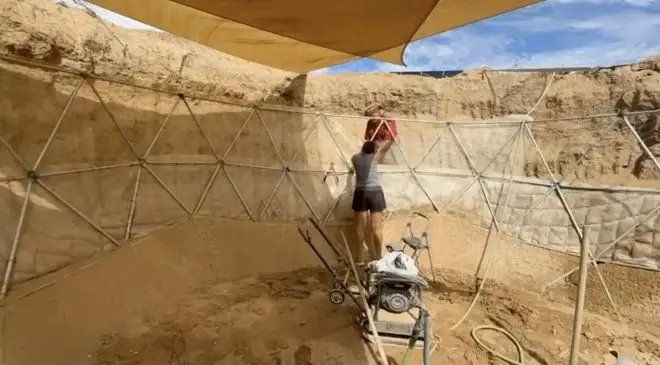
Root Cellar Halfway: Backfill, Doorway & Sphere Assembly
Welcome to Occupy the Land. This week we keep chipping
In this episode of Occupy the Land, Ernie and Donna tackle separate but complementary projects on their Arizona desert homestead. Ernie constructs a compact, forklift-mobile battery shed behind the shipping-container workshop to house inverters and 15kW of batteries, ensuring safe, high-capacity power for tools while planning expandability. Meanwhile, Donna trenches a foot-deep perimeter around a repurposed 12×20 canopy frame, burying quarter-inch hardware cloth to create a predator-proof chicken coop near the garden. With family visits approaching, we organize supplies, repurpose materials, and fortify against desert critters, blending power independence with livestock prep in our evolving off-grid haven!
Transcript:
Now, this is the first shipping container that we got. We needed something that was more secure from the wind and rain and, you know, didn’t leak and so on. So I built these shelves just real quick to, you know, get a workshop back here, you know, have a or tables and pegboard and just a bunch of tools and stuff and supplies and stuff that I knew I needed.
So we did this and it filled up really quick. And I’m going, yeah, we’re going to need another container now. I really like this thing. You know, all of my screws and bolts and so on. I just have access to, you know, wheeled out around US code now. We have a lot of our equipment and everything’s in here, but this is where the workshop and I got welding and stamped press for the conduit.
I think I’m going to move into the other container. Now, here, what we’re doing is, getting ready, you know, fully charged. Our house batteries are doing, may change out some batteries on the bus. And then we have the solar array that we’re doing outside here. And I just got, you know, all kinds of equipment. It’s going to be.
This is a chop shop. This is for cutting the EMT conduit, for making the struts for the dome. And we had the dome done, but to integrate it into the door frames and making windows and all that kind of stuff, you need to cut custom conduit. You know, this stuff here. And, then, you know, I got this is a panel that I had that was made for solar power in my studio.
I wanted to learn solar. I was like a decade ago, and I had this on the side of my home outside the studio, and I had it to where the utilities came in, and I flipped the switch, and it just. I get this out of the way.
I flip this switch. And it would be solar utility. And, so it was just so for us to get up to speed on it, I wanted to learn about it, what its capacity was and everything. But when we moved and we solar say, I just say, nope, I’m taking it out with me because it’s already set up, so it’s just ready to plug in to what’s coming in from the solar array.
And then we have extra boxes back here that I’ll show you there so you get an idea.
Woohoo! What is that? Oh, it’s a little metal detector. Okay, cool. You know. Yeah, I needed that fine stuff. I got a big magnet I drag around, make sure I don’t have nails. Keep. Give me flat tires and stuff. Now, this is so you can see in there. It’s just outlets. Yeah. I mean, they actually put it in, but it’s, powers 220 and outlets for the welders.
Now, the compressor will probably stay in here. The welder and, welding cart, plasma cutter, welding table. You know, the stamp press. Now, that’s the dye there will be showing you that later, another time. And it fits in there. And it goes like this. This start spinning, the motor goes and then I push a flip switch. Yeah I got a set it anyway.
I gotta do some maintenance on it. So this it spins and then I hit that switch and that goes chunk. And that’s what trims and cuts everything. So I got that all refurb and cleaned up and grease and all that kind of stuff. That’s why it’s in a plastic bag in a bag. And then this I got a new motor that we’re going to be upgrading the motor for that.
And so that’s going to go on and replace that motor. And then I got a new belt and everything, all that stuff coming. I have so many things to do, but, we’re keep chipping at it. And this table is where the conduit goes on, and you chop them into the links that you need. And I have, you know, rulers and guides and stuff for that.
And this will probably go in the other shipping container along with this stamp. Press, because when you do that, grinding there doesn’t really create that much, waste or dust or anything. And I don’t use it that much. And I’d really rather open this up for use, but I might leave this here and then make it to welding, station and plasma and everything that will go into the next shipping container, because it has that door.
You know, that roller door on the other side of the tractor there, and it’ll open up into this yard. Put a concrete pad out here. I can put some concrete out now, especially in the summer, because south is, that way. So we have south. So this will always be in the shade here at least a little bit.
They’re in the middle of the day and we’ll have some shade, coming out over the concrete. So I haven’t decided yet. Everything that’s why I like everything mobile and on wheels and, but where we are going to be needing to use a stamp press. Now we’re getting into that part, you know, of putting the dome on top of the earth bags over there, and you can see that dome will go on top of that.
And when we start integrating that into the doors and windows, we’re going to be needing to do some customization. And this is why I haven’t really made a big deal at a workshop. Or people come in, tour and visit other and close friends and family, because if I opened it up, you know, so what are we doing? What we helping you with?
I don’t know, and figured it out yet, but, Yeah, we could teach a lot of things of what we’re doing, but I really don’t have a plan, a metric, because we’re using so many different materials and such. We got to see how to integrate with each other and what’s the best use of our time and the quality and the longevity.
Because the main thing that I’m looking for is longevity. I want where I go when I work on something. I don’t have to touch it ever again, you know? So steel, masonry, aluminum, that’s kind of what we’re doing now. These are the posts that we have. We were going to put this array over, not where that white table is, but the big building, it goes between the shipping containers.
We’re going to, you know, run into it. So I yeah I got to move that well with the tractor wasn’t that big a deal. You know you just kind of just pull them out and then we put these in here. Those panels will go on that rack, and then, yeah, there’s a grounding rod. I got to take care of that, too.
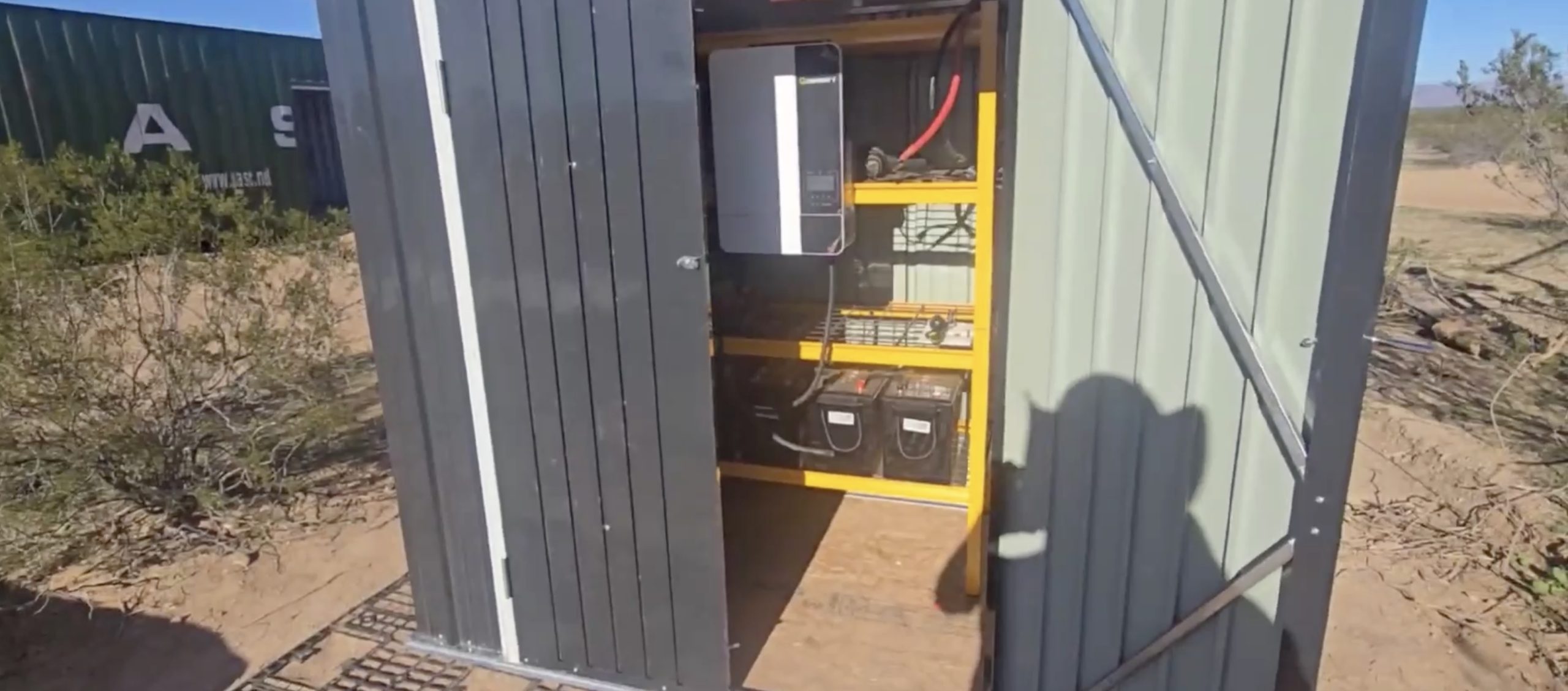
And then, I haven’t really finished this yet, but this is the inverter. And the batteries. And this is a 48 volt. 220. And I can split it into 110, and I just got all the wiring on Friday. But I’ve been busy with this. And, so it’s all day every day, you know, we’ll we’ll get it done.
But, you know, as it starts to come together. But what I’m really happy with is the water. See, when you have, it starts getting wet. It’ll stay wet for a long time, but it’s because the soil has been charged, and I can just, you know, like here, you can see, you know, the, soil is wet, and then these kind of fill in and, well, auger them out.
The real original plan was to auger out these holes and then fill it with sand and gravel. So that way they wouldn’t collapse. And whenever we would, back up the water, it would always be able to go down deep into the soil, because that’s what we’re trying to do is charge it now. Now, this is where we’re building up a firm that goes, you know, along here.
So I never I do anything. I was putting soil, soil where I need it to kind of build it up, to turn this into a lake. Now, this road right here, I’m going to be taking soil from the Sam Pond and our dump trailer, and it just keeps piling up. Now, you may have seen other places that I do that, so every load I’ll just take and just keep dumping it, dumping it, dumping it and build this up.
And it needs to go up quite a bit. I have a stake here. Yeah, there it is. Okay. This stake is how high that needs to go for this to retain all this water from, you know, where I want it to be. So it’s at high and that will make a lake. So that’s what we’re doing. This is this berm that’s going here will shield all this from flooding hopefully.
Yeah that’s the idea. And it doesn’t really matter because we raised the you can see on the shipping containers over there I built up a platform railroad ties on the ends like a U shaped horseshoe. And we put it up on that platform so that it won’t ever, you know, flood, you know, I didn’t want it to have to worry about that.
So we got that above the flood area, and then this road right here will get built up. And then the same on the right side of this road and all of our land, all the way those trees way back there is going to be a lake. Well, it’s the runoff from these mountains. And we had videos of just a little bit of rain.
You got to see it started to do it. And, and you see grass.
I gotta deal with cows coming over there. Eat on my grass. That’s another thing, man. I’m telling you, we. Arizona used to be green. There was a lot greener. And then cattle came and the rancher. And they just suck all the beauty out of it. And, mesquite beans. I was wondering what they were eating now. And it looks like it’s mesquite beans.
And you can see the different color in the foliage and they get even greener. It’s like a olive green and then a darker green, and then it just keeps changing. And you see all the cow tracks in here. So this is what we’re doing is this gets backed up and, you know, even a few inches of water and it goes into the ground.
And as opposed to just being 2 or 3in that it soaks down to and runs off the property, let’s not going to feed anything, water, anything. So we won’t be able to plant trees or orchards. Citrus, fruit trees. That was one that Arizona a lot of people don’t know is number 2 or 3 in orange production citrus next to California, Florida, if they have bad weather or something happens or storms or freezes or whatever.
Arizona moves up in the number two often. So Arizona, it’s like number one in cotton, lettuce. And you believe that Yuma area. It’s a lettuce, lettuce, lettuce. And then you have, of course, a lot of hay. I mean, they’re always. And they’re shipping it off to Saudi Arabia for milk and camels or something, literally.
I mean, that’s kind of what they do. So we’re going to go ahead and keep managing the water. I haven’t been on the tractor for almost a week because we’ve been busy with other stuff. So I’m getting getting kind of antsy, get my tractor and do some stuff. I don’t know if the color comes out on this video, but you can see I get one more little rain and it’s going to be like a soccer field.
I’ve seen this happen before. If we can retain this water, this will be grass. I’ll have a green. You’ll look at it from the drought. You know, I should probably take up the drone. You take up the drone and you look at just our property. The 18 acres. That’s, rectangle two off with the drainage. You go. Damn.
Ernie’s hogging up all the water, man. What’s he doing? So. Oh, here’s, Now, we haven’t had it drain into these. You know, these are, just dotted out around the property and when we get it backed up. Now, we had them in the washes, and they definitely charge, but, we slowed it down, backs it up. And this is what happens.
It goes green. You got to see. And we’re going to show you piece. Now this is a little composting that we got. And we’ve only used one side so far. And you know it’s got you know just crap in there. And you just put it in and rotate it and you know compost. And then we’ll go ahead and use that for planting and stuff and but we’re going to save all this cardboard.
Donna is going to take a dump run with our, green trailer. And this is about a month’s worth of just stuff, you know, garbage in a couple months. That’s not a month. This is what this is at least two, three months. That’s that’s. Oh, we didn’t take this last time. No, this is all new since the last time we were.
Well, I was like a month ago or something. Oh, it’s been a while. They’re like 2 or 3 months maybe. Really? And then all of that cardboard we’re going to save and, you know, flatten it out, you know, let it get wet or not, I don’t care. And, but that cardboard is good for, you know, doing plant planter beds and composting, weed control and so on.
And it’s a resource. So we’re going to go ahead and keep that. I’m just going to take and flatten all that out and store it back on a pallet. And covered so of blow away. And then we’ll take a trash run here directly. And yeah, when you’re out off grid, you know, you take care of your own stuff.
Unfortunately, we haven’t what they call a transfer station that you go and we just dump it, and and we’re good, but we’re going to take all this cardboard and be using that for composting as well. We have a compost ditch over there. And, it’s going to be useful when we start doing a lot of planning. So that’s why we’re starting to clean up everything and getting it all purty and so and organized so we can get to the, the house build or or prototype dome that we’re doing.
And this is getting cleaned up and so on for us, having family come over and so on. So Donna’s taking care of that.
And she likes her Polaris.
So out here, there’s a lot of predators. So for my chicken coop I’m using this repurposed canopy frame 12 by 20. And I had to dig about a foot down at about six inches wide. Just trench around the frame. And I’m going to bury it with a quarter inch hardware cloth along along the bottom of it and then up the sides.
So this is the hardware cloth, and it should be small enough that even the smallest predators can’t get in. But I do need to dig down a bit and bury it along the side so that anything bigger when they dig on it, they can’t really get through. So that’s a project for the next couple of days for me.
While Ernie’s, working on his battery project.
Workshop Power-Up: Battery Shed & Predator-Proof Coop!https://t.co/QWHDHH5SHi pic.twitter.com/YPDJszebGP
— occupytheland (@occupy_the_land) December 26, 2025
Welcome to Occupy the Land. This week we keep chipping
Welcome to Occupy the Land. This week we’re focused on
Welcome to Occupy the Land. In 115-degree heat we backfill